

Your washing machine is responsible for keeping your clothes, linens, and towels fresh, sanitary, and immaculate. Yet, paradoxically, the machine itself rarely gets cleaned. Every single wash cycle deposits microscopic residues of body oils, dead skin cells, soil, hard water minerals, sticky liquid fabric softener, and unrinsed laundry detergent into the dark, hidden chambers of your appliance.
Over time, these accumulated organic layers form a resilient biofilm—a breeding ground for black mold, mildew, and sulfur-producing bacteria. If your freshly washed laundry smells musty right out of the dryer, or if you notice dark spots along the rubber door seal, your washing machine is overdue for a professional-grade deep clean. This comprehensive guide details the exact science, step-by-step procedures, and preventative maintenance protocols required to restore both front-load and top-load washing machines to pristine condition.
Interactive Washing Machine Cleaning Checklist
Select your washing machine design below to generate a tailored, step-by-step cleaning checklist. Check off tasks as you complete them to track your progress in real time.
1. Rubber Door Gasket & Seal
Peel back the rubber folds and inspect for trapped hair, lint, coins, and mildew
💡 Pro Tip: The fold is a moisture trap that breeds black mold and musty odors.
Wipe inside the seal folds with a solution of equal parts white vinegar and warm water
💡 Pro Tip: Use a microfiber cloth wrapped around your finger to reach deep crevices.
Scrub stubborn pink or black mold spots with a paste of baking soda and water
💡 Pro Tip: Let the paste sit for 10 minutes before scrubbing gently with a soft toothbrush.
Dry the entire gasket thoroughly with a clean towel
💡 Pro Tip: Leaving moisture inside the seal guarantees mold return within days.
The Hidden Science of Washer Contamination
To understand why washing machines require dedicated maintenance, we must examine the chemistry of modern laundering. When you wash clothes in cold water using liquid detergent and fabric softener, not all of the product washes away. Liquid detergents are formulated with surfactants, thickeners, and optical brighteners that bind to organic matter. Fabric softeners contain fatty acids and animal or plant-based silicones that coat textile fibers to make them feel soft—but they also leave a waxy, hydrophobic film on the inner drum and outer tub.
Combined with lint shed from garments, minerals dissolved in hard water (calcium and magnesium carbonate), body oils, and shedding skin cells, this creates a nutrient-rich sludge. Inside the warm, dark, enclosed environment of a washing machine, this sludge forms a resilient microbial biofilm. Front-load washers are particularly susceptible because their watertight rubber door seals retain standing water and moisture long after the cycle finishes.
Front-Load vs. Top-Load: Cleaning Vulnerabilities Compared
While both washing machine styles accumulate internal grime, their structural differences create distinct cleaning challenges and maintenance requirements.
| Feature / Area | Front-Load Washers | Top-Load Washers |
|---|---|---|
| Primary Vulnerability | Rubber door gasket mold, trapped water, drain filter clogs | Agitator base grime, outer tub soap scum ring, lid hinge dust |
| Water Efficiency | High efficiency (uses 1/3 the water, reducing rinsing action) | Standard efficiency (submerges laundry completely in water) |
| Odor Susceptibility | High — requires door to be left ajar between cycles | Moderate — better ventilation through top lid design |
| Recommended Cleaning Frequency | Monthly tub clean + weekly gasket wipe down | Bi-monthly tub clean & sanitization cycle |
| Drain Filter Maintenance | Required every 3 to 6 months (removes trapped coins/lint) | Rarely features an accessible consumer cleanable pump filter |
Step-by-Step Professional Deep Cleaning Protocol
Achieving a laboratory-level clean inside your washing machine requires executing a precise sequence of cleaning tasks. Follow these five comprehensive steps to eliminate mold, eradicate odors, and restore mechanical efficiency.
Sanitize the Detergent Dispenser Housing
The detergent drawer is often the most neglected part of a washing machine. Liquid detergent and fabric softener do not dissolve entirely; they leave a sticky residue that coats the dispenser tunnels and breeds mold spores. Pull the drawer out as far as it goes, depress the internal release tab (found on most models), and remove the drawer completely. Submerge it in a basin of hot water mixed with dish soap. Use a soft-bristled brush to scrub out hardened powder and slime. Next, take a flashlight and inspect the ceiling and walls of the dispenser cavity inside the machine. Spray an all-purpose cleaner or diluted vinegar solution into the cavity, let it dwell for 5 minutes, and scrub thoroughly with a bottle brush before reinserting the clean drawer.
Decontaminate the Rubber Door Gasket (Front-Load)
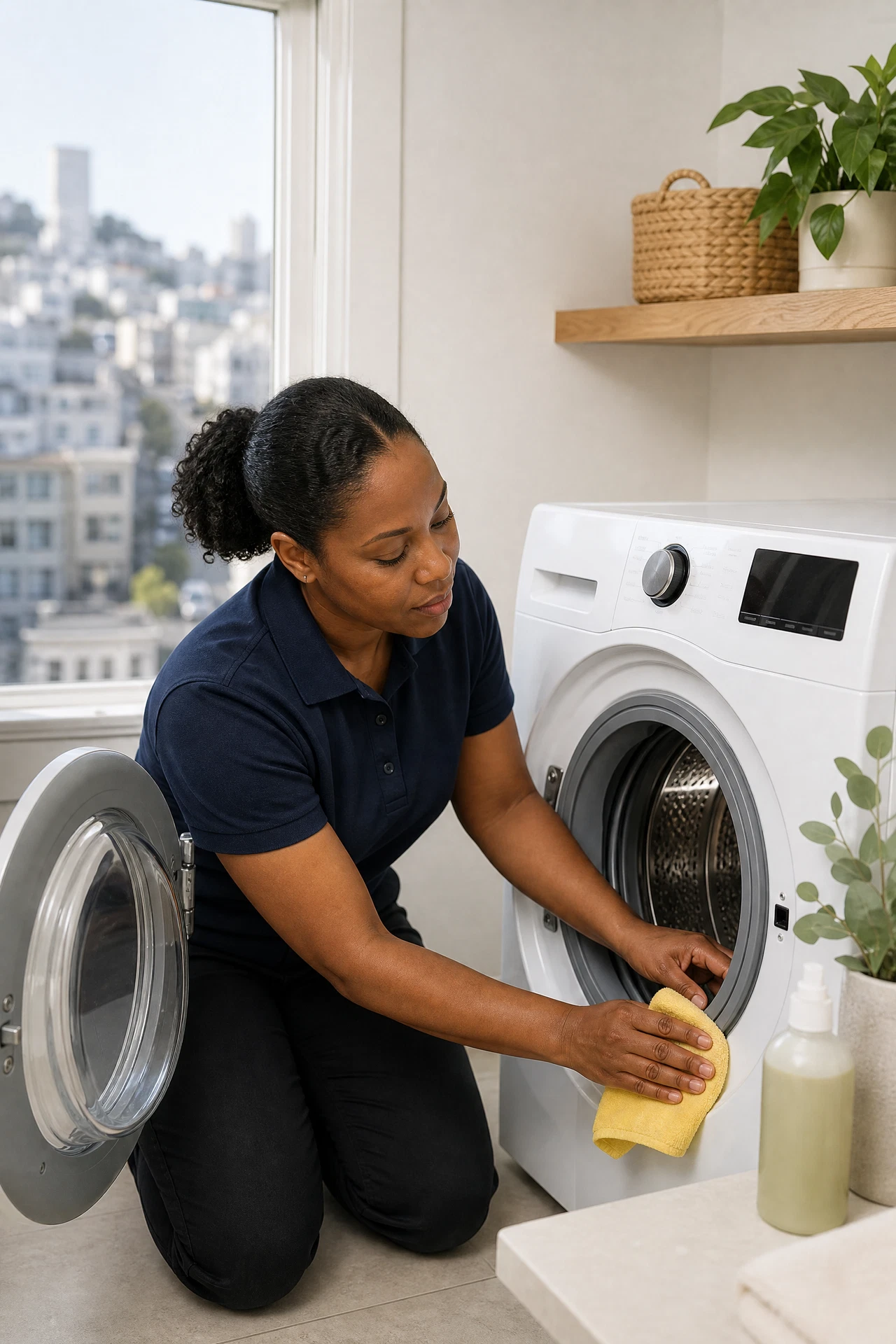
The flexible rubber boot sealing the front-load door is engineered with folds designed to absorb vibration during high-speed spin cycles. Unfortunately, these exact folds trap moisture, lint, hair, and detergent residue. Gently peel back the front and inner lips of the gasket. You will likely discover a dark ring of pink Serratia marcescens bacteria or black mold. Spray the entire interior circumference with a 1:1 mixture of white vinegar and water, or a specialized mildew remover. For stubborn stains, create a thick paste of baking soda and water, apply it directly to the mold spots, and let it sit for 15 minutes. Scrub gently with a microfiber cloth or soft toothbrush—never use abrasive scouring pads or metal scrapers, as puncturing the rubber gasket will cause catastrophic water leaks during operation.
Execute the Internal Drum Descaling & Sanitize Cycle
Once external components are pristine, tackle the inner stainless-steel drum and outer plastic tub. For front-load machines, pour 2 cups of white white vinegar directly into the drum (or the main detergent compartment), and add 1/2 cup of baking soda into the drum. For top-load machines, fill the basin with the hottest water setting on the largest load size, then add 4 cups of white vinegar and 1 cup of baking soda. Select your machine's 'Tub Clean' cycle. If your machine lacks a dedicated tub clean setting, select the longest, hottest normal wash cycle available, preferably with an extra rinse option. The acetic acid in the vinegar dissolves calcium scale, mineral deposits, and soap scum, while the baking soda provides gentle alkaline abrasion to scrub away biofilm without damaging internal rubber hoses.
Clean the Drain Pump Filter and Emergency Trap (Front-Load)
Front-load washing machines feature a drain pump filter located behind a small access panel at the bottom front. This filter captures coins, paper clips, lint, and hair before they can damage the drain pump impeller. When this filter clogs, drainage slows down, and stagnant water creates a persistent foul odor. Before opening the filter door, spread thick towels on the floor and place a shallow baking dish directly under the drain plug. Pull out the small emergency drain tube, remove its stopper, and let trapped water drain completely into your dish. Once empty, unscrew the large filter cap counter-clockwise. Pull the filter out, remove accumulated hair and debris, wash it under running tap water with a brush, and inspect the interior chamber. Screw the filter firmly back into place, ensuring the rubber gasket is seated flush to prevent leaks.
Polish Exterior Surfaces & Establish Airflow Habits
Complete your deep clean by wiping down the exterior housing, control dials, and glass door with a damp microfiber cloth and mild soapy water. Avoid harsh ammonia-based glass cleaners or abrasive scouring powders on digital touchscreens and painted enamel cabinets. Once cleaning is finished, adopt the golden rule of washing machine maintenance: never close the washing machine door completely when the machine is idle. Leaving the door cracked open by at least two to three inches allows continuous airflow through the drum, ensuring residual moisture evaporates rapidly and preventing mold spores from germinating between laundry days.
Safety Cautions and Chemical Mixing Warnings
When cleaning household appliances, chemical safety is paramount. Mixing incompatible cleaning agents can cause hazardous chemical reactions, damage expensive appliance components, or release toxic fumes.
Critical Safety Warning: Never Mix Bleach and Vinegar or Ammonia
Combining chlorine bleach with acidic cleaners like white vinegar releases toxic chlorine gas, which causes severe respiratory distress, coughing, eye irritation, and chemical burns. Similarly, mixing bleach with ammonia produces hazardous chloramine vapors. Always complete vinegar-based cleaning cycles and rinse the drum thoroughly before attempting any chlorine bleach sanitation cycle.
| Cleaning Agent | Safe Application | Hazard / Restriction |
|---|---|---|
| White Vinegar (5% Acetic Acid) | Descaling mineral deposits, neutralizing odors, cutting soap scum | Do not mix with chlorine bleach; avoid prolonged contact with rubber hoses |
| Baking Soda (Sodium Bicarbonate) | Gentle abrasive scouring, neutralizing acidity, deodorizing drum | None for standard washing machine cleaning; safe for all drums |
| Chlorine Bleach (Sodium Hypochlorite) | Sanitizing white loads and killing stubborn mold spores | Never mix with vinegar or ammonia; degrades rubber gaskets if overused |
| Oxygen Bleach (Sodium Percarbonate) | Eco-friendly stain lifting and deep tub cleaning | Must be dissolved in warm or hot water to activate properly |
| Commercial Washer Tablets (Affresh / Tide) | Formulated specifically for drum descaling and odor elimination | Follow manufacturer dosage instructions; do not ingest |
Preventative Maintenance Schedule
Deep cleaning is necessary, but establishing a consistent preventative maintenance routine prevents heavy buildup and extends the operational lifespan of your washing machine.
Daily Habits
- Leave the washing machine door or top lid cracked open immediately after every load to allow internal moisture to evaporate.
- Promptly remove damp garments from the drum rather than letting wet laundry sit overnight.
- Wipe any stray moisture or detergent drips off the outer control panel and rubber seal rim.
Weekly Maintenance
- Wipe down the interior rubber door gasket folds with a dry microfiber cloth.
- Inspect and wipe out the liquid detergent and fabric softener dispenser drawer.
- Check for stray coins or debris in pockets before loading laundry to protect the drain pump.
Monthly Deep Clean
- Run a dedicated 'Tub Clean' cycle using white vinegar and baking soda or specialized cleaning tablets.
- Remove and soak the detergent drawer in warm soapy water.
- Inspect the exterior hoses and water supply connections for signs of weeping or corrosion.
Bi-Annual & Annual Care
- Clean the front-load drain pump filter and remove trapped debris every 3 to 6 months.
- Check water inlet valve screens on the back of the machine for mineral clog buildup.
- Inspect rubber fill hoses for cracking, bulging, or brittleness (replace hoses every 5 years).
Frequently Asked Questions
Expert answers to the most common questions regarding washing machine hygiene, odor elimination, and maintenance protocols.
How often should I clean my washing machine?
You should perform a maintenance tub cleaning cycle every 30 days (or every 30 to 40 wash loads). If you live in an area with hard water, wash large families with heavy soil loads, or use liquid fabric softener frequently, you may need to run a cleaning cycle every two weeks. Weekly wiping of the rubber gasket and detergent drawer should be part of your regular household routine.
Can I use regular household bleach instead of vinegar or washing machine cleaner?
Yes, chlorine bleach is an effective sanitizer and mold killer, but it should be used judiciously. Running a hot water cycle with 1 cup of chlorine bleach sanitizes the drum and destroys mold. However, overuse of chlorine bleach degrades rubber door gaskets, hoses, and internal seals over time. Vinegar and baking soda are preferred for regular descaling and organic odor removal, reserving bleach for occasional sanitization.
Why does my front-load washing machine smell like mildew, and how do I stop it?
The musty mildew odor in front-loaders is caused by a biofilm of soap scum, body oils, and mold growing inside the dark folds of the rubber door gasket and the outer drum. Front-load machines use minimal water, which means detergent residues are not always rinsed away completely. To stop the odor, run a hot vinegar and baking soda cycle, scrub the rubber gasket folds thoroughly, and always leave the door cracked open when the machine is not in use.
Should I leave the washing machine door open after every cycle?
Absolutely. Leaving the washing machine door or top lid open by at least two to three inches is the single most important habit for preventing mold and mildew growth. Enclosed damp spaces trap residual humidity, allowing mold spores to germinate within 24 hours. Airflow is your best defense against musty odors.
How do I clean the drain pump filter on a front-load washer?
Locate the small square access door at the bottom front corner of your front-load machine. Spread old towels on the floor and place a shallow tray underneath the emergency drain tube. Pull out the small plug to drain standing water, then unscrew the large filter cap counter-clockwise. Remove trapped lint, coins, and hair, wash the filter under running water, and screw it securely back into place.
Are commercial washing machine cleaning tablets safe for all machines?
Yes, commercial cleaning tablets such as Tide Washing Machine Cleaner, Affresh, or OxiClean Washing Machine Cleaner are engineered to be safe for all high-efficiency (HE) front-load and top-load washers. They contain concentrated oxygen bleach, surfactants, and descaling agents that break down biofilm and mineral scale safely without damaging internal metal or plastic parts.
What causes black spots on the rubber door seal, and are they dangerous?
The black spots on front-load rubber gaskets are colonies of mold and mildew (such as Cladosporium or Aspergillus) feeding on trapped organic residue and moisture. While minor mold spots are common in damp environments, prolonged exposure can trigger allergic reactions, respiratory irritation, and unpleasant odors. They should be cleaned immediately using a baking soda paste or a vinegar-water solution.
Can I use dish soap in my washing machine to clean it?
No, you should never use standard dish soap or liquid dishwashing detergent in a washing machine. Dish soap creates massive amounts of suds and foam in agitation, which can overflow electrical components, trip error codes, and leave a sticky residue that traps even more dirt.
Maintain a Pristine, Healthy Home Environment
A clean washing machine ensures your clothes remain truly sanitary and fresh. For comprehensive professional home cleaning services that cover every room, surface, and appliance exterior with eco-friendly rigor, explore our professional booking options.
Book Professional Cleaning Services