

The kitchen oven is perhaps the most heavily utilized appliance in residential cooking, yet it is routinely neglected until it begins to emit acrid smoke, trigger fire alarms, or impart burnt flavors onto otherwise pristine meals. For generations, tackling oven grease meant reaching for commercial aerosol oven cleaners laden with sodium hydroxide (lye) and petroleum distillates — harsh chemical concoctions that release toxic fumes, burn skin upon contact, and require sealing off the kitchen with open windows and exhaust fans.
Professional eco-friendly cleaning operators take a fundamentally different approach. By harnessing the natural chemistry of mild alkalis, controlled dwell times, and physical saponification, you can dissolve weeks of baked-on carbon and polymerized oils without filling your home with noxious chemicals. This comprehensive guide covers the science of oven cleaning, step-by-step restoration protocols, rack cleaning techniques, glass door restoration, and an interactive cleaning plan tailored to your oven's exact condition.
The Chemistry of Clean: Why Fume-Free Oven Cleaning Works
To understand why natural oven cleaning methods are so effective, it helps to examine what actually happens inside an oven during months of high-temperature roasting and baking. When fats, oils, and sugars splatter onto interior oven surfaces and are repeatedly subjected to temperatures exceeding 350°F (175°C), they undergo pyrolysis and polymerization. Liquid fats transform into viscous resins, which eventually polymerize into hard, cross-linked carbon crusts that bond tenaciously to porcelain enamel and stainless steel.
Conventional aerosol cleaners attack this carbon using sodium hydroxide, a caustic substance with a high pH that breaks down grease rapidly through aggressive chemical degradation. However, sodium hydroxide is extremely hazardous to human respiratory tissues, skin, and eyes. Furthermore, aerosol propellants release volatile organic compounds (VOCs) that degrade indoor air quality.
Baking soda (sodium bicarbonate), on the other hand, is a mild alkali (pH around 8.3). When mixed with water into a paste and allowed to dwell on grease over several hours, it undergoes a process called saponification — breaking down fatty acids into water-soluble soap molecules. Because baking soda is mildly abrasive rather than chemically caustic, it lifts grease and carbon without etching porcelain enamel, scratching glass windows, or releasing toxic fumes.
Interactive Oven Cleaning Plan & Condition Selector
Select your oven's current condition below to generate a customized, step-by-step cleaning plan with precise dwell times and actionable professional tips.
Moderate Baked-On Grease & Splatter
⏱ 2 hours total (plus 2–4 hour dwell)Designed for ovens used regularly for roasting and baking without recent deep cleaning. Features amber-colored grease spots and baked-on carbon on side walls and floor.
Cool oven, remove racks, burner grates, and convection fan cover if removable
Dwell: 10 min💡 Soak removable metal parts in a warm bathtub with dish soap.
Vacuum loose debris and baked flakes from the bottom of the cavity
Dwell: 10 min💡 Getting rid of dry carbon first ensures your cleaning paste contacts grease directly.
Prepare thick baking soda and castile soap paste
Dwell: 10 min💡 Adding a tablespoon of liquid castile soap enhances grease-cutting ability.
Apply thick layer (1/4 inch) to all grease-stained interior surfaces
Dwell: 15 min💡 Paste will turn brownish-yellow as it lifts grease; this is normal and expected.
Allow extended dwell time for deep alkaline penetration
Dwell: 240 min💡 Leave overnight (4 to 8 hours) for maximum effortless cleaning.
Scrub stubborn spots gently using a non-scratch nylon scouring pad
Dwell: 20 min💡 Never use steel wool on porcelain enamel oven interiors.
Wipe clean with warm water and neutralize with a diluted vinegar spray
Dwell: 15 min💡 Ensure all white residue is removed so the oven doesn't smoke when heated.
Preparation and Safety Essentials
Before applying any cleaning agents, proper preparation ensures both personal safety and the preservation of your oven's delicate internal components. Modern ovens contain sensitive electronic touchpads, glass heating elements, convection fan motors, and gas igniters that can be permanently damaged by excessive moisture or harsh chemicals.
Ensure the oven is completely cold
Never attempt to clean a warm or hot oven. Thermal shock can crack glass doors, and cleaning paste will bake onto hot surfaces instantly, making removal twice as difficult.
Disconnect power or gas supply if necessary
For electric self-cleaning models or wall ovens, switch off the breaker if you plan to clean around electrical terminals or heating element mounts. For gas ranges, ensure burners are off.
Protect surrounding floors and countertops
Lay down old towels or large trash bags on the kitchen floor in front of the oven. Scraping carbon and wiping away alkaline paste inevitably creates drips.
Remove all accessories
Take out oven racks, meat thermometer probes, broiler pans, and removable aluminum foil liners. Racks require a separate soaking protocol rather than in-situ scrubbing.
The Step-by-Step Natural Oven Cleaning Protocol
Executing a professional-grade natural oven clean follows a structured sequence that maximizes chemical dwell time while minimizing physical strain. Here is the exact methodology utilized by Green Planet Cleaning technicians.
Step 1: Vacuum Dry Debris
Use a handheld vacuum or a hose attachment with a soft brush nozzle to suck up loose ash, carbon flakes, and food crumbs from the floor of the oven cavity. Removing dry debris prevents it from forming a muddy paste that gets ground into corners.
Step 2: Mix the Alkaline Paste
Combine approximately 1.5 cups of baking soda with warm water in a mixing bowl until it forms a thick, spreadable paste similar in consistency to cake frosting. For exceptionally greasy ovens, add 1 tablespoon of liquid castile soap or dish soap.
Step 3: Coat Interior Surfaces Generously
Using rubber gloves and a silicone spatula or sponge, coat all interior surfaces of the oven cavity with a 1/4-inch layer of paste. Pay special attention to baked-on grease spots on the side walls and back panel. Avoid applying paste directly onto gas burner ports, electric heating elements, or convection fan openings.
Step 4: Allow Extended Dwell Time
Close the oven door and let the paste dwell for a minimum of 4 hours, or ideally overnight (8 to 12 hours). During this time, the baking soda saponifies grease and softens caramelized carbon deposits without requiring harsh scrubbing.
Step 5: Wipe and Neutralize
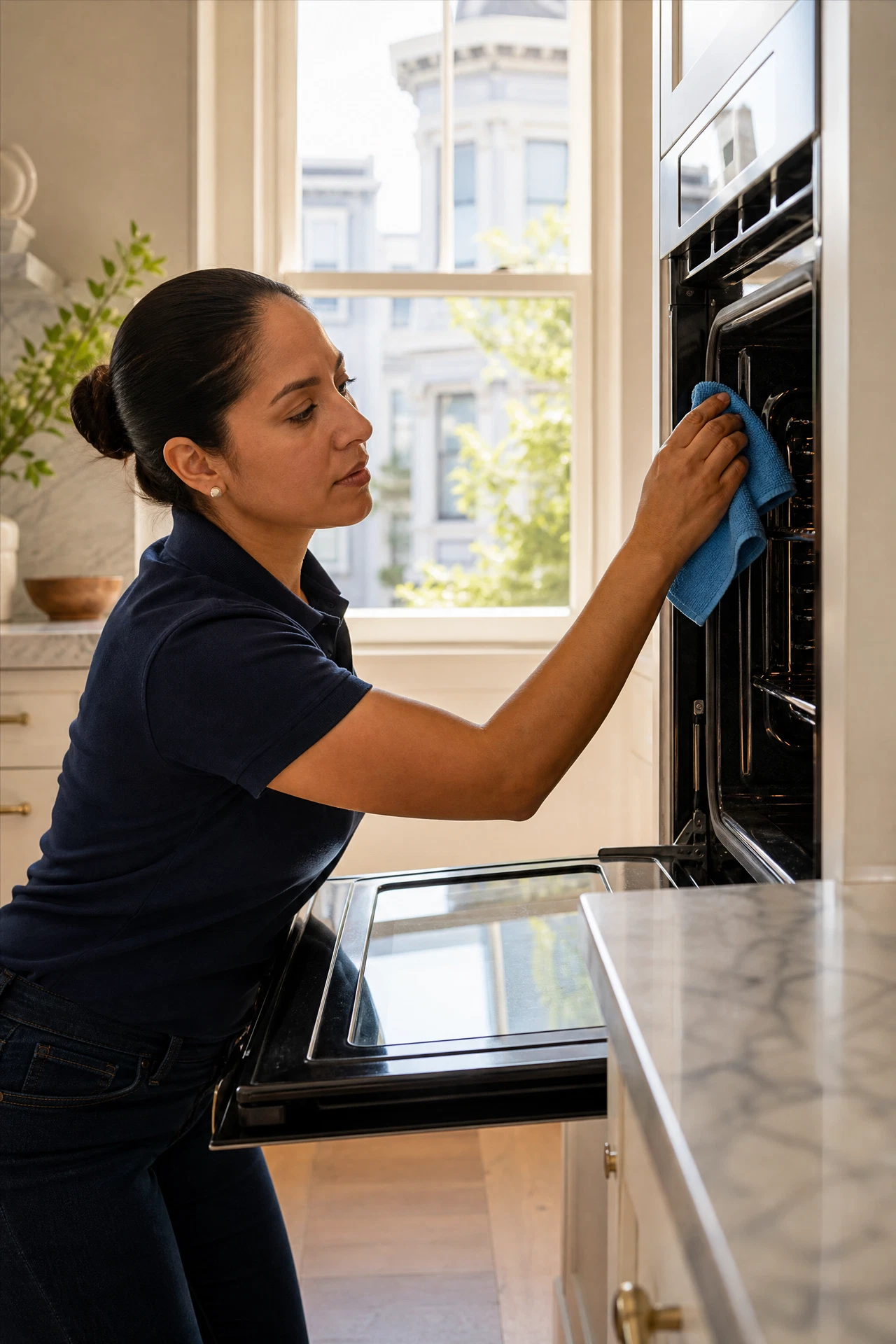
Using a damp microfiber cloth or non-scratch sponge, wipe away the dried baking soda paste along with the dissolved grease. Rinse your cloth frequently in clean warm water. Spray the interior lightly with white vinegar; any remaining baking soda will fizz gently, neutralizing the surface. Wipe dry with a clean towel.
How to Clean Oven Racks Without Endless Scrubbing
Oven racks are notoriously difficult to clean because their wire grid design creates dozens of tight corners where grease accumulates. Scrubbing them with a wire brush or abrasive pad is exhausting and scratches the chrome or nickel plating, causing accelerated future rusting.
The professional bathtub soak method offers a zero-effort alternative:
- Line your bathtub with old towels to prevent the metal racks from scratching the porcelain or acrylic surface.
- Place the dirty oven racks flat on top of the towels inside the tub.
- Fill the tub with very hot tap water until the racks are completely submerged.
- Add 1/2 cup of dishwasher powder (which contains active oxygen bleach and enzymes) or 1 cup of washing soda to the water and agitate to dissolve.
- Let the racks soak overnight (8 to 12 hours). The enzymes and alkali will break down baked-on grease completely.
- In the morning, wipe the racks down with a microfiber cloth or non-scratch pad; greasy residue will slide right off. Rinse thoroughly with clean water before placing them back into the oven.
Restoring Glass Oven Doors Without Scratching
The glass window on an oven door is subjected to repeated heating and cooling cycles that bake grease between the interior glass panes or bake amber-colored resin directly onto the inner surface. Homeowners often make the mistake of using razor blades or heavy-duty steel wool, which permanently scratches the tempered glass and weakens its structural integrity under high heat.
To clean glass safely, create a paste using equal parts baking soda and hydrogen peroxide (3% solution). Apply the paste across the glass window, let it dwell for 30 to 45 minutes, and agitate gently with a non-scratch plastic scouring pad. The combination of mild abrasive baking soda and oxidizing hydrogen peroxide lifts oxidized brown grease effortlessly without scratching. Wipe clean with a damp microfiber cloth and buff dry with a lint-free cloth or crumpled newspaper for a streak-free finish.
Surface & Component Reference Guide
Different parts of your oven require specialized care. Using the wrong cleaning agent can damage heating elements, discolor stainless steel, or etch porcelain enamel.
| Oven Component | Recommended Natural Solution | What to Avoid |
|---|---|---|
| Porcelain oven cavity | Baking soda paste + water + vinegar rinse | Steel wool, oven cleaner sprays with lye |
| Oven window glass | Baking soda + hydrogen peroxide paste | Razor blades, abrasive metal scouring pads |
| Chrome/nickel racks | Bathtub soak with dishwasher powder | Leaving racks in oven during self-clean cycle |
| Stainless steel exterior | Microfiber cloth + diluted castile soap or vinegar | Chlorine bleach, abrasive scouring powders |
| Gas burner grates | Hot water and dish soap soak + nylon brush | Harsh acidic descalers on cast iron |
| Control knobs & dials | Warm soapy microfiber cloth (remove if possible) | Soaking electronic touch panels in water |
The 7 Oven Cleaning Mistakes Most People Make
Avoiding common pitfalls ensures your oven stays in pristine condition and functions efficiently for years to come. Here are seven frequent mistakes to avoid:
Relying blindly on the self-cleaning cycle
The high-heat self-cleaning cycle heats the oven to 900°F (482°C) to burn grease into ash. However, this extreme temperature frequently warps heating elements, blows thermal fuses, destroys electronic control boards, and releases heavy smoke from leftover food residue.
Getting cleaning paste on electrical heating elements
Applying baking soda paste directly onto exposed electric heating elements or gas igniters can insulate them, causing heating failure or erratic temperature regulation.
Using steel wool on porcelain enamel
Steel wool creates deep micro-scratches in porcelain oven cavities. Once scratched, the enamel loses its smooth finish, causing future grease to bond even more tightly.
Skipping the neutralization step
Failing to wipe away or neutralize residual baking soda with vinegar leaves a chalky white film that smokes intensely the next time the oven is preheated.
Leaving racks inside during high-heat self-cleaning
Subjecting chrome or nickel-plated racks to 900°F temperatures ruins their protective plating, turning them dull gray and making them sticky and difficult to slide.
Ignoring spills immediately after they happen
Waiting months to clean up a sugary spill or cheese drip allows it to caramelize and carbonize repeatedly, turning a 5-minute wipe into a 4-hour deep cleaning project.
Using abrasive scouring powders on stainless steel exteriors
Abrasive powders ruin the brushed grain of stainless steel appliance fronts, leaving permanent dull patches and swirl marks.
Maintenance Schedule: How Often to Clean Your Oven
Establishing a proactive maintenance routine prevents heavy carbon buildup and eliminates the need for grueling marathon cleaning sessions.
| Frequency | Task | Time Required |
|---|---|---|
| After every use | Wipe up fresh spills and grease drips with a damp cloth while oven is warm (not hot) | 2 minutes |
| Monthly | Wipe down oven door glass and interior floor to prevent grease accumulation | 15 minutes |
| Quarterly | Perform full baking soda paste clean of interior cavity and soak racks | 45 minutes active (+ dwell) |
| Annually | Inspect door gasket seal for cracks and test oven temperature calibration | 10 minutes |
Frequently Asked Questions
Why should I avoid using the high-heat self-cleaning cycle on my oven?
The high-heat self-cleaning cycle reaches temperatures around 900°F (482°C) to incinerate food residue into ash. This extreme thermal stress frequently warps heating elements, damages electronic control boards, blows thermal fuses, and burns out door lock motors. Furthermore, burning food residue produces thick smoke and volatile organic compounds. Using a natural baking soda paste avoids these risks entirely while protecting your appliance's lifespan.
How do I clean my oven window glass without scratching it or using harsh chemicals?
Create a thick paste using equal parts baking soda and 3 percent hydrogen peroxide. Spread the paste evenly across the inner glass window and let it dwell for 30 to 45 minutes. The baking soda provides gentle mechanical scouring while the hydrogen peroxide oxidizes baked-on brown grease. Scrub gently with a non-scratch plastic scouring pad, wipe clean with a damp microfiber cloth, and buff dry for a crystal-clear finish.
How do I clean heavily soiled oven racks without endless scrubbing?
Line your bathtub with old towels to protect the porcelain or acrylic surface, place the dirty racks inside, and fill the tub with very hot water until submerged. Add 1/2 cup of dishwasher powder or washing soda and let the racks soak overnight (8 to 12 hours). The active enzymes and alkaline agents break down polymerized grease completely, allowing you to wipe the racks clean effortlessly in the morning.
Why does my oven smoke after I clean it, and how can I prevent it?
Oven smoking after cleaning is almost always caused by residual baking soda powder that was not completely wiped away, or leftover grease particles that were loosened but not removed. When you preheat the oven, the remaining sodium bicarbonate particles heat up and smoke. Prevent this by thoroughly rinsing all interior surfaces with a damp cloth followed by a light spray of white vinegar and a final dry wipe.
Is baking soda safe for all oven interior surfaces, including gas igniters?
Baking soda is safe for porcelain enamel, stainless steel, and glass interior surfaces. However, you should avoid packing baking soda paste directly onto gas burner igniters, electric heating elements, or convection fan intake vents. If paste accidentally touches an igniter, wipe it away gently with a damp cotton swab before operating the oven.
How often should I deep clean my oven versus doing light maintenance?
For households that cook regularly (3 to 5 times per week), a light wipe-down of the oven floor and glass should be performed monthly. A thorough deep clean — including applying baking soda paste to the entire cavity and soaking the racks — is recommended every 3 to 4 months. Wiping up fresh spills immediately after cooking drastically reduces the frequency of deep cleans.
Can I use commercial eco-friendly oven sprays instead of a DIY baking soda paste?
Yes. Several commercial eco-friendly brands manufacture fume-free, biodegradable oven cleaners that utilize plant-based surfactants and mild alkalis. While they are more convenient than mixing your own paste, checking ingredient labels to ensure they are free of petroleum distillates, ammonia, and sodium hydroxide ensures true indoor air safety.
How do I remove burnt-on grease from the bottom heating element area safely?
For electric ovens with exposed lower heating elements, never bend or scrub the element forcefully. Instead, apply baking soda paste carefully around the base mounts using a soft sponge or cloth, let it dwell for 30 minutes, and wipe away gently. For concealed bake elements (beneath the oven floor porcelain panel), simply clean the smooth floor surface according to standard cavity protocols.
Want a Professionally Cleaned Oven Without the Effort?
Green Planet Cleaning provides professional, eco-friendly home cleaning services throughout our service areas. Let our experienced teams restore your kitchen appliances to pristine condition.
Book Online