

The kitchen is the most-used room in any home and the hardest to keep genuinely clean. Grease builds up on surfaces faster than most people realize. The refrigerator becomes a science experiment. The oven accumulates baked-on residue that gets harder to remove with every use. And the sink — one of the most bacteria-laden surfaces in the average home — gets a quick rinse and is considered "clean."
This guide covers the professional method for cleaning every zone of a kitchen: the correct products for each surface, the right frequency for each task, and the order of operations that makes the job faster and more effective.
Kitchen Cleaning by Zone
Frequency
Daily wipe, weekly deep clean
Recommended Products
Method All-Purpose or Seventh Generation Multi-Surface
Step-by-Step
- Clear everything off the counter
- Spray with all-purpose cleaner and let dwell 1 minute
- Wipe with microfiber cloth in one direction
- Dry with a clean cloth to prevent streaks
- Return items to counter
The Professional Order of Operations
Professional cleaners follow a specific sequence in the kitchen that prevents cross-contamination and avoids re-cleaning surfaces. The key principle: apply products and let them dwell while you work on other areas, then come back to wipe.
Apply oven cleaner first (if doing a deep clean)
Oven cleaner needs 20–30 minutes of dwell time. Apply it first, then move on to other tasks. By the time you've cleaned everything else, the oven cleaner has done its work and wiping is easy.
Soak burner grates and removable parts
Remove burner grates, drip pans, and any removable parts and soak them in hot soapy water while you clean the rest of the kitchen. Soaking dissolves grease far more effectively than scrubbing dry.
Spray and dwell on greasy surfaces
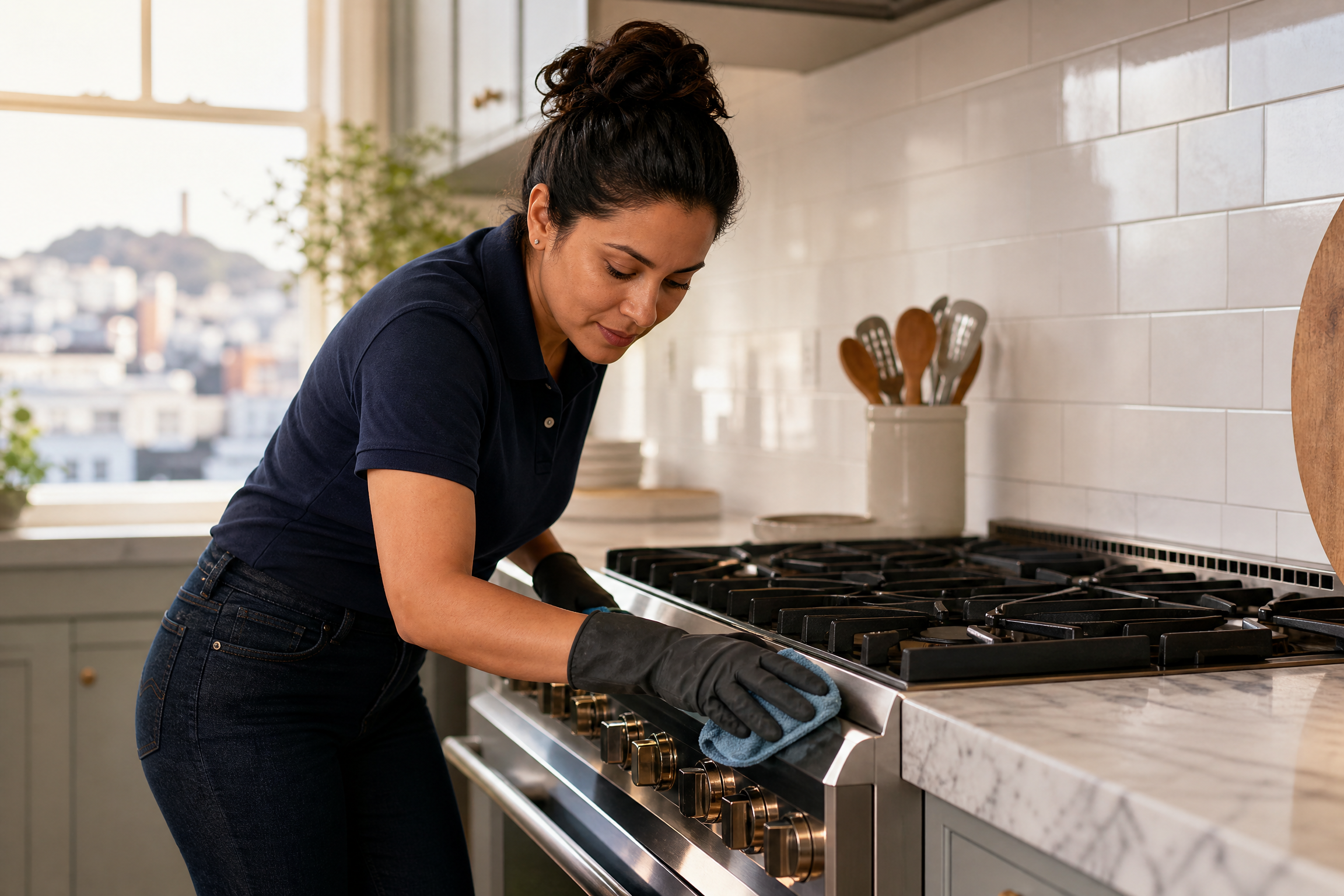
Apply degreaser to the stovetop, range hood, and any greasy surfaces. Let it dwell for 3–5 minutes. Dwell time is the key to cutting through grease without excessive scrubbing.
Clean top to bottom
Start with upper cabinets and work down to countertops, then appliances, then the floor. This way, any drips or debris that fall during upper cleaning get caught when you clean lower surfaces.
Refrigerator and microwave
Clean the microwave interior (a bowl of water + lemon juice heated for 2 minutes loosens splatter). Wipe the refrigerator exterior and handle. Save the refrigerator interior for a monthly deep clean.
Sink last
The sink is used throughout the cleaning process to rinse cloths and tools. Clean it last — after everything else is done — so it's genuinely clean when you finish.
Floor last
Always sweep and mop the floor last. Debris from cleaning upper surfaces falls to the floor, and foot traffic during cleaning tracks in more dirt. A final sweep and mop leaves the kitchen genuinely clean.
The 10 Most-Missed Kitchen Cleaning Spots
Frequently Asked Questions
How long does it take to properly clean a kitchen?
A thorough weekly kitchen clean takes 30–45 minutes. A monthly deep clean (including refrigerator interior, oven, and inside cabinets) takes 1.5–2.5 hours. Professional cleaners complete the same work faster because they use commercial-grade degreasers with longer dwell times.
What's the best way to clean a greasy stovetop?
Apply a degreaser (Seventh Generation Degreaser or Method Heavy Duty Degreaser) and let it dwell for 5 minutes before wiping. For baked-on grease, a paste of baking soda and dish soap applied and left for 15 minutes works well. Avoid abrasive scrubbers on glass stovetops — use a plastic scraper instead.
How do I clean a self-cleaning oven?
Run the self-cleaning cycle when you have 3–4 hours and can ventilate the kitchen well — the cycle produces smoke and fumes. After the cycle completes and the oven cools, wipe out the ash residue with a damp cloth. The self-cleaning cycle doesn't clean the door glass — use a non-abrasive oven cleaner on the glass.
How often should I clean my refrigerator?
Wipe the exterior and handle weekly. Clean the interior monthly — remove all food, take out shelves and drawers, wash them in warm soapy water, and wipe the interior walls. Check and discard expired items monthly. Clean the drip pan quarterly.
What's the best way to remove hard water stains from a stainless steel sink?
Bar Keepers Friend (liquid or powder) is the most effective product for stainless steel sinks. Apply with a damp cloth, scrub in the direction of the grain (not in circles), and rinse thoroughly. For hard water deposits, a paste of Bar Keepers Friend left for 5 minutes before scrubbing works well.
How do I keep my kitchen smelling fresh?
The most common sources of kitchen odors are the garbage disposal, trash can, and refrigerator. Clean the disposal monthly with ice cubes and citrus peels. Wash the trash can weekly. Keep an open box of baking soda in the refrigerator. Ventilate while cooking — run the range hood and open a window.
How much does professional kitchen cleaning cost in San Francisco?
Professional kitchen cleaning is included in a full home cleaning service. For a 2BR/2BA home in San Francisco, a standard clean starts at $280 and a deep clean (including oven interior, refrigerator interior, and inside cabinets) starts at $560 with Green Planet Cleaning.
Professional Kitchen Cleaning in San Francisco
Green Planet Cleaning's teams use professional-grade degreasers and eco-friendly products for a kitchen that's genuinely clean — not just surface-level tidy.
Get a Free Estimate