

The bathroom is the hardest-working room in any home — and the one most people clean incorrectly. Most people spray and wipe. Professional cleaners work in a specific order, use the right products for each surface, and never skip the spots that matter most to health inspectors and guests alike.
This guide covers the professional method for cleaning a bathroom from top to bottom: the correct order of operations, which products to use on which surfaces, how long each task should take, and the hidden spots most people miss. Use the interactive checklist below to work through your bathroom systematically, or skip to the section you need.
Interactive Bathroom Cleaning Checklist
Work through each section in order. The checklist tracks your progress and shows you pro tips for each task.
Apply bowl cleaner under the rim and let sit 5 minutes
💡 Use a non-toxic cleaner like Method Antibac or Seventh Generation
Scrub the bowl with a toilet brush
💡 Work from under the rim down to the waterline
Wipe the exterior: tank, lid, seat, base
💡 Use a microfiber cloth with all-purpose cleaner — don't forget the hinges
Clean the flush handle
💡 One of the most-touched surfaces in any bathroom
Wipe the floor around the base
💡 Use a separate cloth from the rest of the bathroom
The Professional Order of Operations
Most people clean their bathroom in whatever order feels natural — usually starting with the sink because it's at eye level. Professional cleaners follow a strict top-to-bottom, dirty-to-clean sequence that prevents cross-contamination and avoids re-cleaning surfaces you've already done.
Ventilate first
Turn on the exhaust fan or open a window before you start. Cleaning products release fumes, and a ventilated bathroom dries faster after cleaning — reducing the risk of mold growth on grout and caulk.
Apply bowl cleaner and let it dwell
Squirt toilet bowl cleaner under the rim first, then move on to other tasks. The dwell time (5–10 minutes) does the work for you. Coming back to scrub after dwell time requires far less effort than scrubbing immediately.
Spray shower and tub surfaces
Apply bathroom cleaner to tile walls, the tub, and the shower floor. Again, let it dwell while you work on other surfaces. Soap scum and hard water deposits dissolve with time — not elbow grease.
Clean the mirror and vanity
Work from the top of the mirror down to the countertop. Spray glass cleaner on the mirror, wipe in circular motions, then move to the countertop and sink. Clean the faucet last — it's the dirtiest part of the sink area.
Scrub the shower and rinse
By now the cleaner has had time to work. Scrub tile walls, grout, and the tub with a brush, then rinse thoroughly. Residue left on tile attracts more soap scum and makes future cleans harder.
Scrub and flush the toilet
Scrub the bowl, flush, then wipe the exterior from top to bottom: tank lid, tank body, seat lid, seat, bowl exterior, base. Use a separate cloth from the rest of the bathroom.
Sweep and mop the floor
Always sweep before mopping — wet hair sticks to tile and is nearly impossible to remove with a mop. Mop from the farthest corner toward the door so you don't walk on the wet floor.
Replace and restock
Put bath mats back, restock toilet paper and soap, replace towels. A bathroom that's clean but out of supplies doesn't feel clean to guests.
The Right Products for Each Surface
Using the wrong product on the wrong surface is one of the most common bathroom cleaning mistakes. Bleach on natural stone etches the surface permanently. Abrasive scrubbers on acrylic tubs leave micro-scratches that trap soap scum. Here's what to use where.
| Surface | Recommended Product | Avoid |
|---|---|---|
| Porcelain toilet bowl | Seventh Generation Toilet Bowl Cleaner | Bleach (damages seals over time) |
| Ceramic tile | Method Antibac All-Purpose Spray | Vinegar on grout (degrades sealer) |
| Acrylic tub / shower | Soft Scrub or Bon Ami | Abrasive pads (scratches surface) |
| Chrome faucets | Bar Keepers Friend (liquid) | Bleach (pits chrome) |
| Glass shower doors | Method Glass Cleaner + squeegee | Paper towels (leave lint) |
| Natural stone (marble, travertine) | pH-neutral stone cleaner only | Vinegar, bleach, or acidic cleaners |
| Grout | Oxygen bleach (OxiClean) + brush | Chlorine bleach (degrades grout sealer) |
| Mirror | Method Glass Cleaner or diluted white vinegar | Paper towels (leave streaks) |
The 8 Spots Most People Miss
A bathroom can look clean and still be harboring bacteria in places that rarely get attention. These are the spots that professional cleaners check on every visit — and that most homeowners skip entirely.
Toilet hinges and the underside of the seat
Bacteria and urine splatter accumulate in the hinges where the seat attaches to the bowl. Most people wipe the top of the seat but never lift it to clean underneath.
The exhaust fan cover
Dust buildup on the fan cover reduces airflow by up to 40%, which means moisture stays in the bathroom longer — the primary cause of mold growth on grout and caulk.
The showerhead
Mineral deposits inside the showerhead create a perfect environment for Legionella bacteria. Soak the head in white vinegar monthly to dissolve buildup.
Behind and under the toilet
The floor behind and under the toilet base collects dust, hair, and splatter that a regular mop misses. Use a flat mop head or a damp cloth to reach this area.
Toothbrush holder
Studies have found that toothbrush holders are among the most bacteria-laden surfaces in the average home — more contaminated than the toilet seat. Wash weekly in hot soapy water.
The inside of the trash can
Bathroom trash cans collect used cotton swabs, floss, and tissue — all of which can harbor bacteria. Spray the inside with disinfectant and let it dry before replacing the bag.
Caulk lines around the tub and shower
Pink and black mold grows in caulk before it becomes visible on tile. Clean caulk lines with an oxygen bleach solution monthly to prevent mold from taking hold.
Light switch plates and door handles
These are the most-touched surfaces in any bathroom and among the least cleaned. Wipe with a disinfectant wipe every week.
How Often Should You Clean Each Part of Your Bathroom?
Not every bathroom task needs to happen every week. Here's the professional frequency guide used by Green Planet Cleaning's teams in San Francisco and Marin County.
| Task | Frequency | Notes |
|---|---|---|
| Toilet bowl scrub | Weekly | More often with heavy use or young children |
| Sink and faucet wipe | Weekly | Daily wipe-down takes 30 seconds |
| Mirror | Weekly | Toothpaste splatter accumulates fast |
| Shower/tub scrub | Weekly | Squeegee after every use to extend time between scrubs |
| Floor sweep and mop | Weekly | More often with pets or high foot traffic |
| Grout scrub | Monthly | Oxygen bleach + stiff brush |
| Showerhead soak | Monthly | White vinegar in a bag tied around the head |
| Exhaust fan cover | Monthly | Vacuum or wipe with damp cloth |
| Caulk inspection and cleaning | Monthly | Replace caulk if black mold has penetrated |
| Full deep clean (all surfaces) | Quarterly | Or hire a professional for a one-time deep clean |
When to DIY vs. When to Call a Professional
Regular weekly maintenance is something most homeowners can handle themselves. But there are situations where a professional bathroom cleaning service is the right call — not because you can't do it, but because the time, equipment, and expertise required make professional cleaning the more efficient choice.
DIY is fine for
- Weekly maintenance cleaning (toilet, sink, mirror, floor)
- Squeegee after showers to prevent water spots
- Quick wipe-downs between professional visits
- Restocking supplies and replacing bath mats
Call a professional for
- Deep cleaning after a renovation or construction project
- Move-in or move-out cleaning (security deposit at stake)
- Grout restoration — professional steam cleaning removes stains DIY products can't touch
- Mold remediation on caulk or grout (requires proper containment)
- Quarterly deep cleans to reset the bathroom to like-new condition
Professional Bathroom Cleaning Pricing in San Francisco (2026)
Professional bathroom cleaning is typically included in a full home cleaning service rather than booked as a standalone service. Here's what to expect for a full home clean that includes a thorough bathroom clean.
| Home Size | Standard Clean | Deep Clean |
|---|---|---|
| Studio / 1 BR | $240 | $480 |
| 2 BR / 1 BA | $260 | $520 |
| 2 BR / 2 BA | $280 | $560 |
| 3 BR / 2 BA | $350 | $700 |
| 4 BR / 3 BA | $420 | $840 |
Clean+ members save 20% on biweekly service and 25% on weekly service. Deep clean prices are approximately 2× the standard clean rate.
Cleaning Tips for Specific Bathroom Types
Not all bathrooms are the same. Victorian homes in San Francisco, Craftsman homes in Marin County, and modern condos each present different cleaning challenges.
Victorian bathrooms (San Francisco)
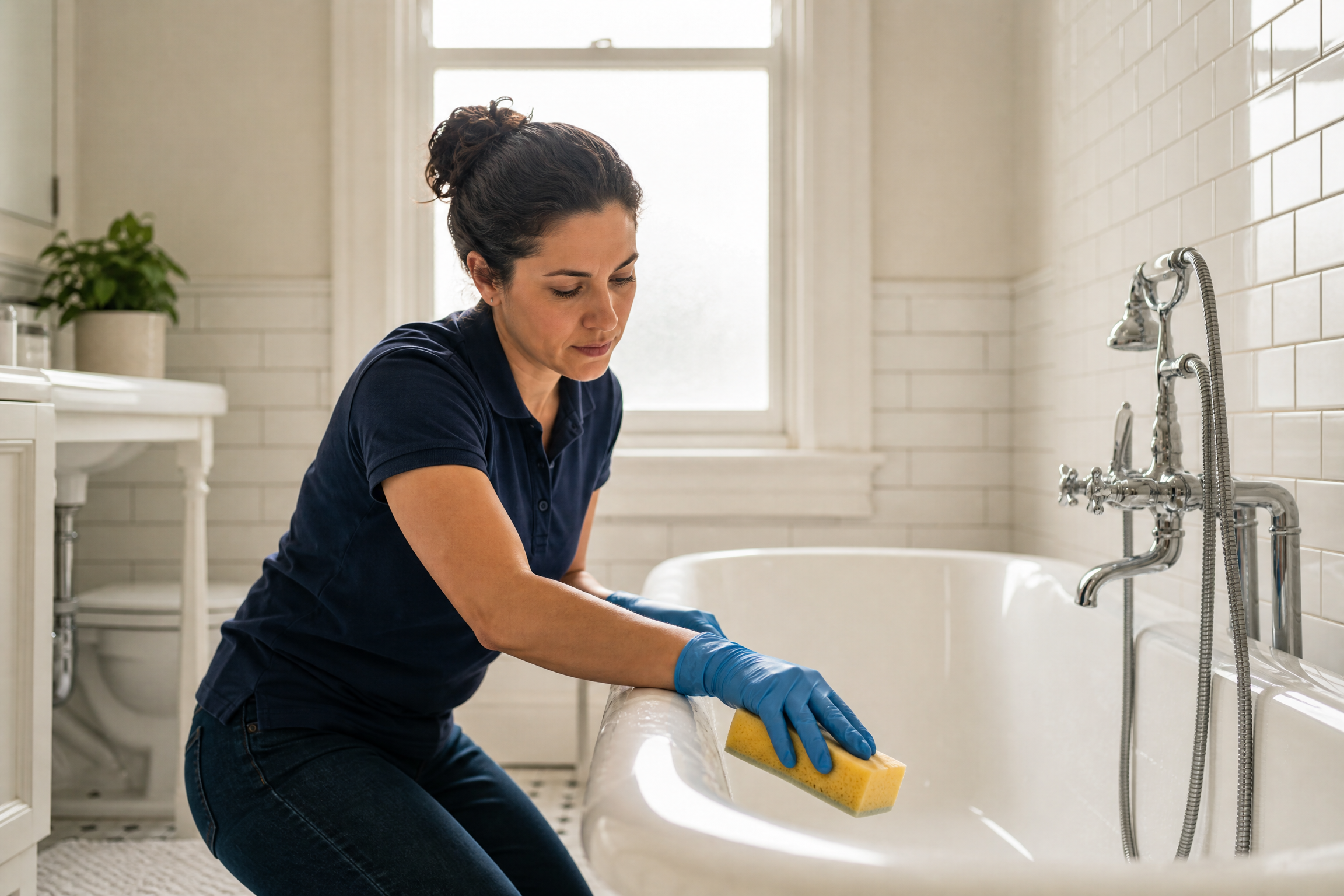
- Original cast iron tubs require non-abrasive cleaners — Bon Ami or Soft Scrub only
- Subway tile grout in Victorian bathrooms is often original and fragile — avoid high-pressure steam on old grout
- Pedestal sinks have no vanity storage, so the floor around the base gets dirtier faster
- Original wood floors in Victorian bathrooms need pH-neutral cleaners — no vinegar or bleach
Craftsman bathrooms (Marin County)
- Craftsman homes often have tile with wide grout lines that trap dirt — a stiff grout brush is essential
- Natural stone countertops (common in Marin renovations) require pH-neutral cleaners only
- Large walk-in showers with frameless glass need daily squeegee to prevent hard water spots from Marin's mineral-rich water
- Radiant heated floors need to be dry before turning on heat — clean and dry thoroughly
Modern condo bathrooms (SF)
- Frameless glass shower enclosures need daily squeegee — San Francisco's hard water leaves spots fast
- Matte black fixtures (popular in modern SF condos) show water spots more than chrome — wipe dry after every use
- Floating vanities have space underneath that collects dust — clean this area weekly
- Quartz countertops are low-maintenance but need pH-neutral cleaners — avoid abrasives
Frequently Asked Questions
How long does it take to properly clean a bathroom?
A thorough bathroom clean takes 20–35 minutes for a standard bathroom. A deep clean — including grout scrubbing, showerhead descaling, and exhaust fan cleaning — takes 45–60 minutes. Professional cleaners are faster because they use commercial-grade products with longer dwell times and purpose-built tools.
What's the difference between a standard clean and a deep clean for bathrooms?
A standard clean covers all visible surfaces: toilet, sink, mirror, shower/tub, and floor. A deep clean adds grout scrubbing, showerhead descaling, exhaust fan cleaning, caulk treatment, inside of cabinets, and detailed work on fixtures. Deep cleans are recommended quarterly or before/after a move.
How do I remove hard water stains from my shower?
Hard water stains (calcium and mineral deposits) respond best to acid-based cleaners. White vinegar diluted 1:1 with water works for light stains. For heavy buildup, CLR or Lime-A-Way applied with a non-scratch pad is more effective. Avoid these products on natural stone — use a stone-safe descaler instead.
How do I prevent mold in my bathroom?
The primary cause of bathroom mold is moisture. Run the exhaust fan for 20 minutes after every shower. Squeegee glass and tile walls after showering. Replace caulk at the first sign of discoloration. Keep grout sealed — reapply grout sealer annually. If mold is already established, treat with an oxygen bleach solution before it penetrates the grout.
Is it safe to mix cleaning products in the bathroom?
Never mix bleach with ammonia (produces toxic chloramine gas) or bleach with vinegar (produces chlorine gas). Never mix different drain cleaners. When in doubt, rinse surfaces thoroughly between products. Eco-friendly cleaners like Method and Seventh Generation are generally safe to use in sequence without rinsing between applications.
How often should I replace my shower curtain liner?
Shower curtain liners should be replaced every 6–12 months, or sooner if you notice pink or black mold that won't wash out. Machine-wash fabric liners monthly in hot water with a cup of white vinegar. Plastic liners are less expensive to replace than to clean repeatedly.
How much does a professional bathroom deep clean cost in San Francisco?
Professional bathroom deep cleaning is typically included in a full home deep clean service. For a 2BR/2BA home in San Francisco, a deep clean starts at $280 with Green Planet Cleaning. The deep clean rate is approximately 2× the standard clean rate and includes grout scrubbing, fixture descaling, and detailed work on all surfaces.
Want a Professional-Level Clean Without the Work?
Green Planet Cleaning's teams serve San Francisco and Marin County with eco-friendly products and professional-grade results. Book a one-time deep clean or set up recurring service.
Get a Free Estimate