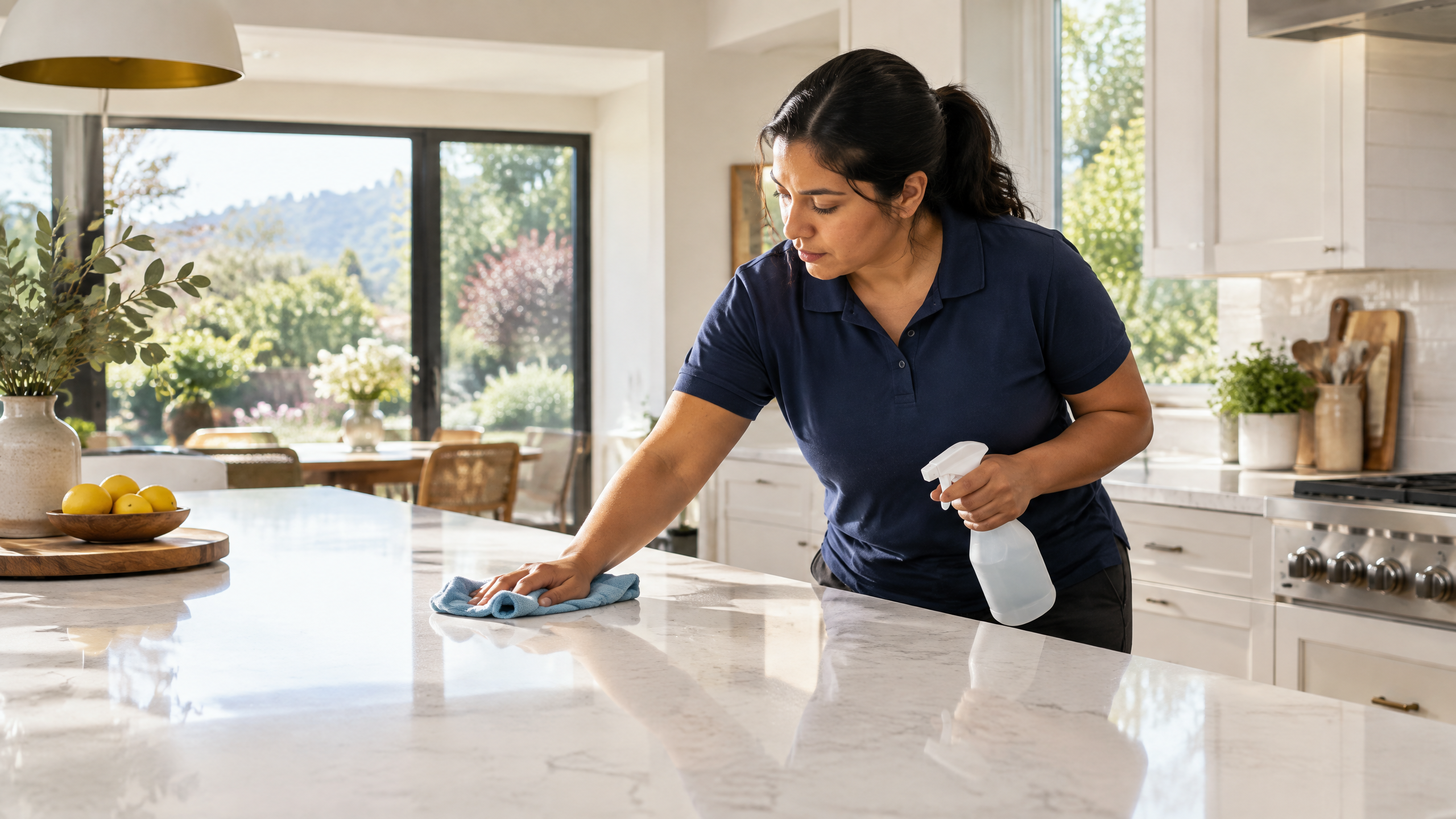


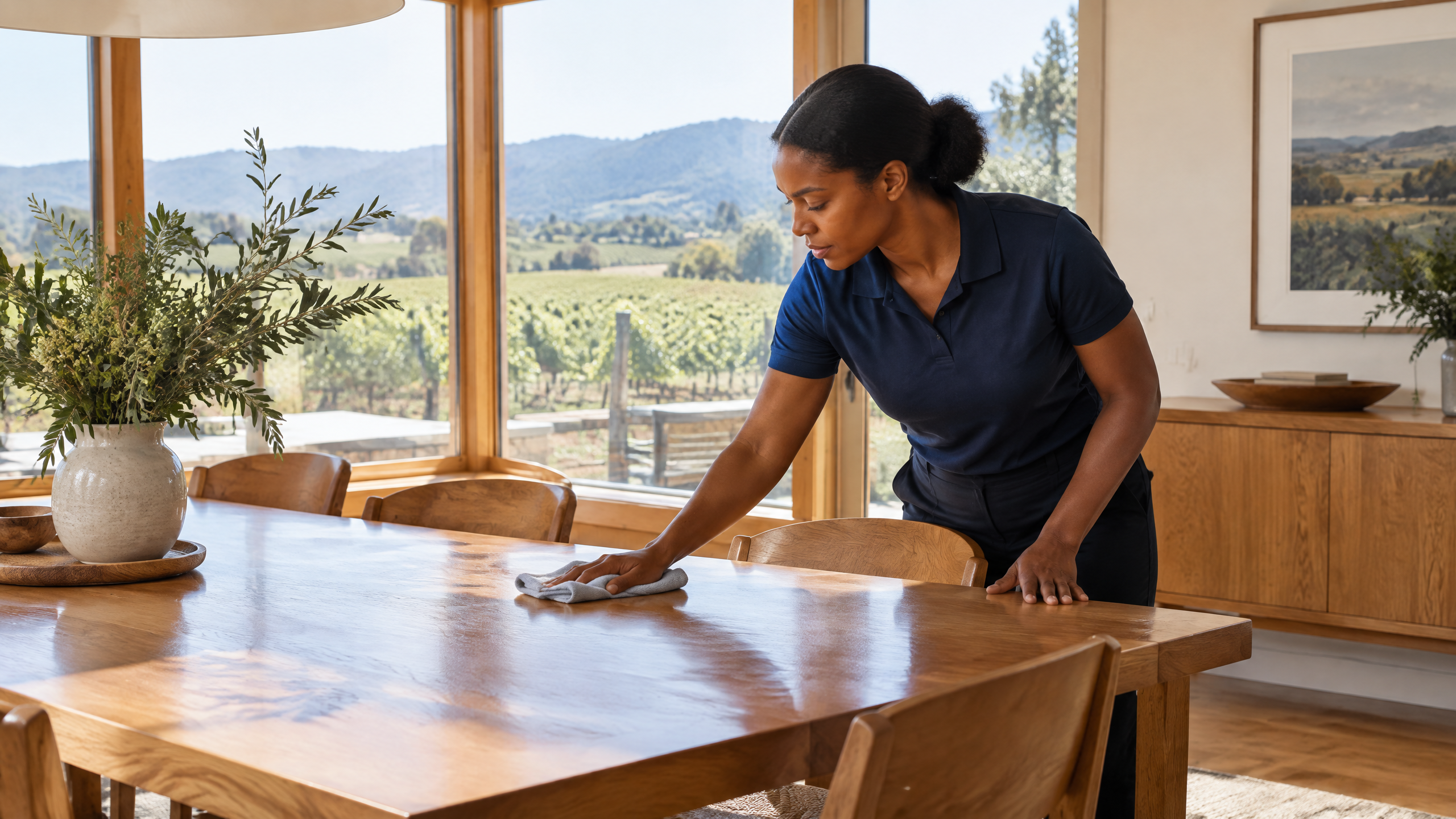
Recurring house cleaning in Sonoma County is less about chasing an ideal-looking home and more about making ordinary weeks manageable. A dependable schedule can keep kitchen and bathroom upkeep, dust on open shelving, floor debris from busy entries, and the other repeat tasks from becoming the family’s weekend project. For households balancing commutes, school calendars, remote work, gardening, and visitors, the useful question is not simply how often to clean, but which rhythm and scope fit the way the home is actually used.
The county’s homes call for practical planning. A compact Santa Rosa townhouse, a Sebastopol cottage with mud at the door, a Petaluma family home, and a Healdsburg property used for frequent gatherings can have very different pressure points. This guide explains how to choose a recurring cadence, establish a workable starting condition, communicate priorities, and distinguish standard maintenance from the more detailed work of a deep or move-related cleaning.
Planning note: A clear scope makes a cleaning visit more useful. Share access details, the rooms that matter most, and any selected interior tasks before requesting an estimate.
Why a recurring plan works for Sonoma County households
Cleaning needs tend to build gradually, then become visible all at once. The kitchen gathers daily use, bathrooms show their workload, and floors collect what comes in from patios, gardens, driveways, and regular foot traffic. A recurring plan assigns those high-use areas a consistent place on the calendar. Instead of deciding whether there is enough time for a full reset every weekend, the household can maintain a baseline and direct attention to the rooms that matter most.
Frequency should reflect household activity rather than a one-size-fits-all rule. Weekly visits can suit homes with children, pets, frequent cooking, regular entertaining, or several people working at home. Biweekly service is often a sensible maintenance rhythm for smaller or less intensively used homes. Monthly visits can help a household that manages routine tidying well but wants professional support before dust, bathroom detail, and floor care stack up. The appropriate choice may change with a season or a household schedule.
Consistency is also operationally useful. When the rooms, access instructions, materials, and recurring priorities are documented, each visit begins with less guesswork. That matters on a larger property with several bathrooms as much as it does in a city apartment. A clear plan leaves room to flag a kitchen before a dinner, an entry after a wet week, or a guest room before family arrives without turning every appointment into an entirely new scope.
Plan the first visit before setting the schedule
Start by assessing the home honestly. If counters, bathrooms, floors, and common surfaces are already being maintained, a standard cleaning may be the right first step. If detail has been deferred for months, there is visible buildup around fixtures and edges, or the household wants a more thorough reset before recurring care begins, a deep clean creates a more useful baseline. Beginning with the right service level avoids asking a maintenance visit to do two different jobs at once.
Then make a short, ranked list rather than a long wish list. Identify the rooms used every day, surfaces that need special care, areas that tend to be skipped in the household routine, and any rooms that are off limits. A family might rank the kitchen, hall bath, dining table, and entry; a work-from-home couple might put the kitchen, primary bath, and office floors first. Explain these priorities before the appointment so the visit is organized around actual use.
Access information belongs in the plan too. Share gate or door instructions, parking limitations, stairs, pets, alarm procedures, and the best contact for questions. In rural pockets of Sonoma County, directions and cell-service limitations can be relevant; in denser neighborhoods, street parking or building entry may be the main consideration. Clearing papers, fragile objects, loose laundry, and countertop clutter before service helps provide access. It is preparation, not a request to pre-clean the home.
Six priorities for recurring house cleaning in Sonoma County
Use these recurring priorities as a planning tool, then adapt the emphasis to the home’s layout, household activity, and chosen service scope.
- Kitchen maintenance: focus on accessible counters, sinks, appliance exteriors, cabinet fronts, dining surfaces, and the floor around meal-prep areas. A kitchen used for daily cooking generally benefits from more frequent attention than a lightly used guest kitchen.
- Bathroom rotation: prioritize toilets, showers or tubs, vanities, mirrors, fixtures, and floor edges. Let the team know which bathrooms have the heaviest use so the recurring scope matches the household’s real traffic pattern.
- Entry and floor transitions: shoes, garden debris, damp weather, and everyday comings and goings can make entryways and adjacent floors a high-value focus. Mark routes that need extra attention, especially where indoor and outdoor living overlap.
- Living and dining surfaces: include dusting on accessible furniture, shelves, window ledges, tables, and commonly touched surfaces, along with the floors that frame those spaces. This keeps rooms used for meals, conversation, and work ready for normal life.
- Bedrooms and work areas: decide whether every bedroom is part of each visit or whether some rooms rotate. In an active home office, accessible desk-adjacent surfaces and floors may need regular care, while a seldom-used room may need a different cadence.
- Periodic detail tasks: reserve buildup-prone items such as baseboards, interior doors, window tracks, blinds, and selected appliance or cabinet interiors for a deep-cleaning plan or clearly selected add-ons. Naming these tasks prevents them from being assumed in a standard maintenance visit.
Understand standard, deep, and move-related cleaning
Standard cleaning is designed to maintain an occupied home on a regular rhythm. It typically centers on kitchens, bathrooms, accessible dusting, common living areas, and floors, with priorities confirmed for the specific home. This is the practical option once the household has a manageable baseline. It is not intended to cover every accumulated detail task or every interior area on each visit, so the estimate and recurring checklist should make the boundaries clear.
A deep cleaning goes further into the detailed work that routine maintenance does not normally reach: buildup-prone edges, cabinet fronts, baseboards, fixtures, interior doors, window tracks, and other agreed accessible areas. It is often the best first visit for a home that needs a reset after a busy period, lengthy travel, or a gap in professional care. Deep cleaning is not a repair service or a substitute for specialized work following construction; flag unusual conditions during the estimate.
Move-related cleaning is planned for a move-in or move-out when timing, an empty or nearly empty home, and selected interiors such as cabinets or appliances are central to the handoff. It differs from both an occupied-home maintenance clean and a deep clean because access and room condition are different. Arrange it after belongings and unwanted items have been removed and, when possible, after any repair or contractor work is complete. Confirm the exact handoff deadline and priority rooms before booking.
Compare common cleaning choices
| Option | Best use |
|---|---|
| Standard recurring cleaning | Best for an occupied Sonoma County home that already has a workable baseline. It supports the repeating kitchen, bathroom, dusting, and floor tasks that keep daily spaces manageable between visits. |
| Deep cleaning | Best for establishing or restoring a baseline when detail work has accumulated. It allows more attention to agreed edges, fixtures, tracks, cabinet fronts, and other buildup-prone accessible surfaces before maintenance begins. |
| Move-in or move-out cleaning | Best for a transition in an empty or nearly empty home, where timing, interior cabinets or appliances, and a clear handoff scope matter more than an ongoing household routine. |
Flat-fee planning figures for Sonoma County cleaning
Pricing is set as a flat-fee estimate based on the home’s size, bathrooms, current condition, access, and selected scope. Standard cleaning starts at $240. For deep cleaning, a small one-bedroom starts at $300; a typical two-bedroom, two-bath home is about $480, and a three-bedroom, two-bath home is about $540. These figures help with planning, while the actual estimate confirms the home-specific work.
Move-out cleaning begins at $240 for a small one-bedroom. A typical two-bedroom, two-bath move-out is about $360, subject to the unit’s condition, access, selected interior tasks, and readiness for service. Clearing the property before the appointment is useful because it lets the cleaning scope focus on accessible surfaces and agreed interiors rather than belongings left behind. For a move-related appointment, share the deadline early so timing can be assessed with the requested scope.
Recurring scheduling can lower the maintenance cost after the appropriate baseline is established. Weekly Clean+ receives 25% off, and biweekly service receives 20% off. Those discounts apply to the recurring rhythm, not as a substitute for selecting the right initial service. A home that needs detailed catch-up work may be better served by a deep clean first, then a weekly or biweekly maintenance plan that protects the result.
Set up a dependable recurring routine
Request an estimate with the home’s bedrooms and bathrooms, the desired cadence, current condition, priority rooms, and useful access notes. Mention stairs, gates, pets, parking, a home office, or areas that should not be entered. If the first visit needs a reset, identify it as a deep-cleaning request rather than assuming standard maintenance will cover accumulated detail. A good estimate turns the scope into a plan that can be repeated without re-explaining the household each time.
For an overview of scheduling and scope, explore recurring house cleaning in Sonoma County. Before the appointment, put away fragile items and clear the surfaces and floors that need access. Keep any last-minute priorities concise and practical, such as concentrating on the primary bathroom before guests arrive or giving the kitchen and dining room extra attention after a busy week.
A countywide plan can still account for a particular community’s logistics. Households near the Russian River or in wine-country areas may want to confirm directions and gate details; apartment residents may need to coordinate building access. If your needs are centered there, review Healdsburg house cleaning for a local service reference. Revisit the cadence after several visits and adjust only when household use—not a generic rule—calls for it.
Frequently asked questions
How often should I schedule recurring house cleaning in Sonoma County?
Weekly service can fit high-traffic homes, frequent cooking, pets, regular guests, or several people working at home. Biweekly service is a common maintenance choice for many households, while monthly visits may suit a lightly used home with a strong in-between routine. Choose based on use and priorities.
What is the difference between standard and deep cleaning?
Standard cleaning maintains the repeating work in an occupied home, including agreed kitchen, bathroom, accessible dusting, and floor tasks. A deep clean adds detailed work on buildup-prone areas such as edges, fixtures, baseboards, tracks, and cabinet fronts. It is often useful before beginning recurring service.
How much does recurring cleaning cost?
Standard cleaning starts at $240. The final flat-fee estimate depends on the home’s size, bathrooms, condition, access, and selected scope. Weekly Clean+ receives 25% off, and biweekly service receives 20% off once a recurring plan is selected.
Do I need to be home during a recurring cleaning visit?
The access arrangement can be planned around the household. Provide clear instructions for entry, gates, parking, pets, alarms, and the best point of contact before the visit. You do not need to pre-clean, but clearing fragile items and the surfaces that need attention helps the team work efficiently.
When should I book a move-out clean instead of a deep clean?
Choose move-out cleaning when the home is being handed off and empty or nearly empty access, timing, and selected interiors are central. Choose a deep clean when an occupied home needs detailed catch-up work before normal use continues. An estimate can confirm the appropriate scope for the home’s condition.
Can I change room priorities from one recurring visit to the next?
Yes. Keep the core scope consistent, then share a short update when a particular room needs more attention, such as a guest bathroom, entryway, or dining area before a gathering. Advance notice makes it easier to balance the update with the home’s regular maintenance priorities.
Ready to plan the right visit? Visit recurring house cleaning in Sonoma County or request a flat-fee estimate for your home.
Let Green Planet Handle the Cleaning
Family-owned since 2010. 100% eco-friendly. Greentified™ Guarantee — if you're not happy, we re-clean for free within 24 hours.
Serving Marin County, San Francisco, Sonoma, Napa, San Mateo & Contra Costa.