

Upholstery cleaning is widely regarded as one of the most intimidating household maintenance tasks. Unlike smooth hard floors or washable countertops, upholstered furniture features complex textile weaves, delicate dyes, multi-layer foam padding, and hidden wooden or metal inner frames. One wrong move—such as using tap water on a sensitive velvet sofa or scrubbing an ink stain with dish soap—can result in permanent water rings, fiber distortion, color bleeding, or ruined cushions.
The secret to professional upholstery cleaning is not aggressive scrubbing or powerful chemicals; rather, it is chemical and moisture management. Professional technicians understand the chemistry of textile cleaning codes, the physics of ring formation during evaporation, and the critical importance of low-moisture extraction. Whether you are dealing with everyday body oils on a sectional sofa, stubborn pet stains on an armchair, or dust accumulation on dining chairs, this comprehensive guide will walk you through the exact methodologies used by professional cleaners to restore your furniture safely and flawlessly without leaving unsightly water marks.
Understanding Upholstery Cleaning Codes (W, S, WS, X)
Before applying any cleaning product, water, or solvent to your furniture, you must locate the manufacturer's cleaning tag. Usually sewn beneath cushion zippers, attached to the inner lining under the sofa base, or tucked inside pillow casings, these letter codes dictate precisely what cleaning agents are chemically compatible with your fabric. Ignoring these codes can lead to irreversible fabric damage, shrinkage, or permanent ring stains.
Interactive Fabric Code Guide & Protocol Selector
Click your furniture's cleaning code below to instantly review approved cleaning agents, forbidden substances, and the step-by-step cleaning protocol tailored to your textile type.
Code WS — Water or Solvent Cleaners
Versatile and resilient fabrics that tolerate both water-based cleaning agents and dry-cleaning solvents. Common on microfiber, blended synthetic fabrics, and textured weaves.
✓ Safe Cleaning Agents
- Distilled water with mild detergent
- Water-based upholstery foams
- Dry-cleaning solvents
- Isopropyl alcohol
✕ Strictly Forbidden
- Excessive soaking
- Harsh bleach
- Abrasive scouring pads
Recommended Cleaning Protocol:
- Test both water-based foam and solvent on an inconspicuous area first.
- Vacuum the entire cushion surface and crevices to remove debris.
- For water-soluble stains (coffee, mud), use mild soapy water foam.
- For oil-based stains (grease, makeup), use a dry-cleaning solvent or isopropyl alcohol.
- Blot thoroughly with clean, dry microfiber towels.
- Dry rapidly with an oscillating fan to prevent water ring formation.
The Physics of Water Marks (And How to Prevent Them)
One of the most frustrating phenomena in upholstery cleaning is the appearance of dark, crusty rings around a spot after you have successfully cleaned it. Homeowners frequently assume they did not clean the stain thoroughly enough, but the opposite is true: the mark is actually caused by the physics of evaporation.
When water or cleaning solution penetrates an upholstery fabric and begins to dry, capillary action draws moisture outward from the center of the damp patch toward the dry perimeter. As the water evaporates at the outer edge, it deposits dissolved minerals, suspended dust particles, water-soluble sizing agents, and loosened soil that were carried along in the current. These particles accumulate in a dense ring right where the wet edge meets the dry fabric. On delicate fabrics like microfiber, velvet, and textured synthetics, this ring is visually stark and difficult to remove.
Pro Strategy: How to Prevent Water Rings
To prevent water rings, never clean just a tiny isolated spot with a sharp circular boundary. Instead, use the feathering technique: dampen the stained area, and gradually feather (blend) the moisture outward into the surrounding clean fabric in an irregular, fading gradient. Furthermore, always use distilled water (which lacks mineral content) and accelerate drying immediately using an electric fan or a hairdryer on the cool setting.
Interactive Spot-Testing Checklist
Never skip spot testing, even if your furniture's cleaning tag seems straightforward. Different dye batches, hidden sizing agents, and age-related fiber degradation can cause unexpected reactions. Work through this interactive checklist before starting any full cleaning session.
Spot-Testing Verification Steps
0 of 4 completed1. Locate Hidden Area
Find an inconspicuous spot such as the underside of a sofa skirt, inside a cushion zipper flap, or the lower rear corner.
2. Apply Cleaning Solution
Apply a few drops of your chosen cleaning solution (water-based foam or solvent) to a white cotton cloth and press against the fabric for 30 seconds.
3. The White Cloth Test
Lift the cloth and examine it closely. If any dye has transferred from the upholstery fabric onto the white cloth, stop immediately—the fabric is not colorfast.
4. The Ring Formation Check
Allow the test spot to dry completely (up to 30 minutes). Inspect for water rings, stiffening, texture distortion, or fading.
Step-by-Step Upholstery Cleaning Masterclass
To achieve professional results without water marks or fiber damage, execute the following seven sequential steps with meticulous care and patience.
Comprehensive HEPA Vacuuming & Debris Extraction
Never introduce liquids to dusty upholstery, as dust mixes with water to form mud that embeds deeply into fabric weaves and foam. Use your vacuum cleaner's upholstery attachment and soft brush nozzle to meticulously vacuum every cushion surface, button tuft, piping seam, and hidden crevice. Reach deep into cushion crevices with the crevice tool to extract crumbs, pet hair, and abrasive grit that weaken fibers over time.
Pre-Inspection and Stain Identification
Examine the sofa for specific stain types. Protein stains (blood, urine, milk) require cold water and enzymatic cleaners. Oil stains (body grease, cosmetics, food oils) require dry-cleaning solvents or isopropyl alcohol. Tannin stains (coffee, tea, wine) respond best to mild dish soap and white vinegar solutions. Knowing the exact nature of the stain prevents you from setting it permanently with the wrong treatment.
Preparing the Correct Cleaning Solution
For Code W or WS fabrics, create a gentle surfactant solution by mixing two cups of lukewarm distilled water with one teaspoon of mild, dye-free dish soap (such as Dawn) and one teaspoon of white vinegar. Whip the mixture vigorously to create a rich, dry foam. For Code S fabrics, use a commercial dry-cleaning solvent or pure isopropyl alcohol in a well-ventilated room.
Gentle Agitation and Foam Application
Scoop up the dry foam (avoiding liquid water puddles) using a soft-bristled horsehair brush or a clean microfiber cloth. Gently work the foam into the fabric using light, circular motions. The surfactants in the foam will encapsulate suspended body oils and dirt particles without saturating the underlying foam cushion padding.
Blotting and Residue Extraction
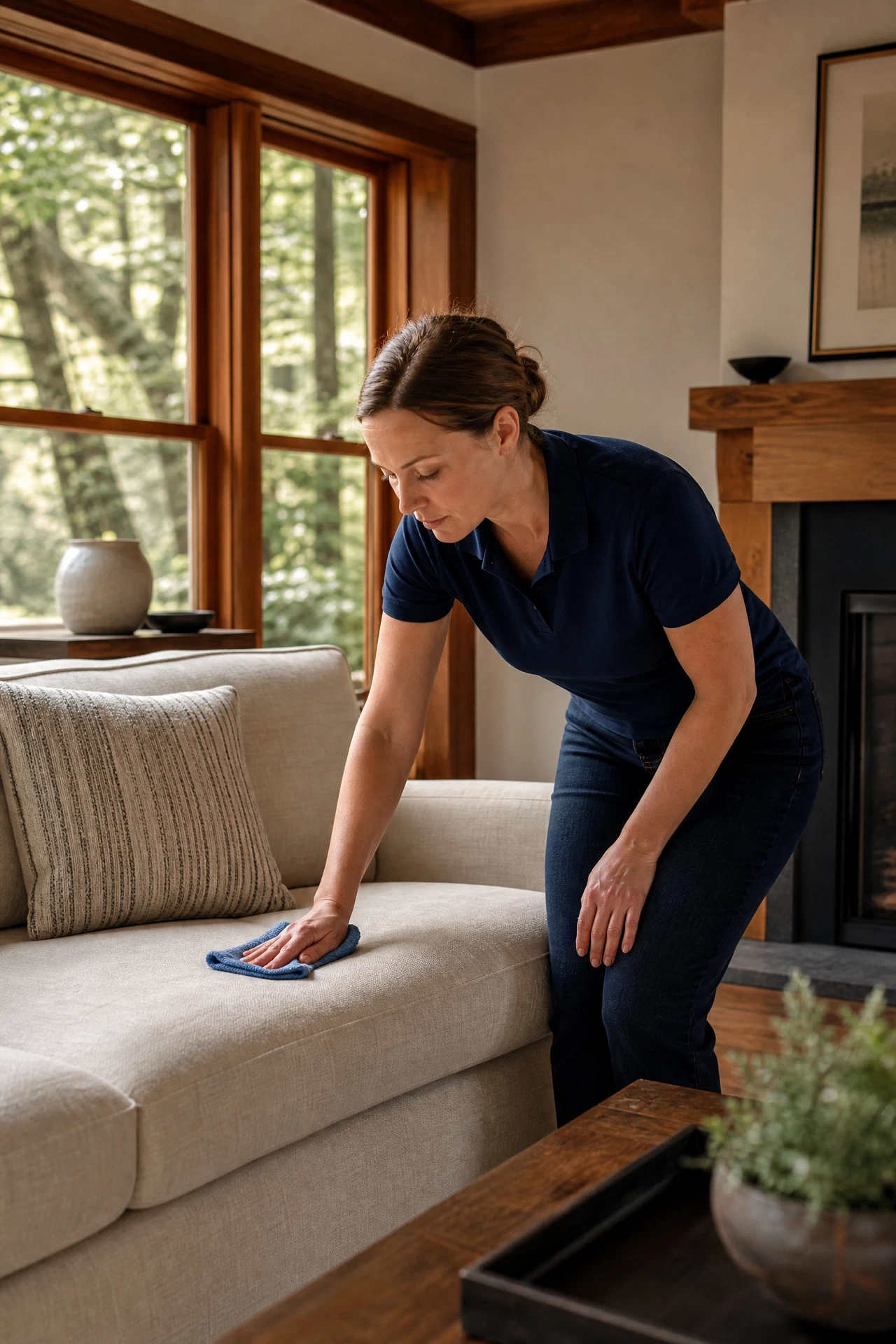
Immediately press a clean, dry white microfiber towel firmly against the cleaned area to extract the suspended dirt and moisture. Do not rub or scrub, which distorts fabric piles and causes pilling. Repeat the blotting process with a second towel dampened with clean distilled water to remove any residual soap film, which would otherwise attract future dirt.
Rapid Drying and Feathering
Prevent water marks by drying the fabric immediately. Position oscillating fans directly toward the damp cushions. If necessary, use a hairdryer set to the <strong>cool</strong> setting (never heat, which can shrink synthetic fibers or set stains). Feather the damp edges outward so there is no sharp boundary line where wet meets dry.
Post-Cleaning Grooming and Pile Restoration
Once the fabric is completely dry, natural fibers and velvets may feel slightly stiff or flattened. Gently brush the fabric in the direction of its natural nap using a soft garment brush or specialized upholstery brush. This restores the plush texture, fluffiness, and luxurious hand-feel of the textile.
Upholstery Fabric Comparison & Cleaning Protocols
Different textile compositions require radically different maintenance approaches. Review this comprehensive comparison table before attempting any spot removal or general cleaning.
| Fabric Type | Typical Code | Water Risk | Recommended Method | Key Precaution |
|---|---|---|---|---|
| Synthetic Microfiber | WS | Medium | Mild soap foam or isopropyl alcohol | Avoid soaking; brush nap after drying |
| Performance Polyester | W or WS | Low | Water-based upholstery shampoo | Extremely durable; highly stain resistant |
| Natural Cotton / Linen | S or W | High | Dry solvent (S) or professional clean | Prone to severe water marking and shrinkage |
| Velvet (Synthetic) | S or WS | Medium | Dry-cleaning solvent or steam by pro | Never crush pile; brush in one direction |
| Leather & Faux Leather | None | Low | Damp microfiber with mild saddle soap | Never use harsh detergents or silicone sprays |
| Wool Blends | W or S | High | Dry extraction or low-moisture solvent | Heat causes wool to felt and shrink permanently |
Common Upholstery Cleaning Mistakes to Avoid
Even well-intentioned homeowners frequently commit errors that permanently ruin their furniture. Keep these critical warnings in mind:
1. Over-Wetting Foam Cushions
Dumping water or soaking upholstery causes moisture to penetrate the inner polyurethane foam. Foam takes days or weeks to dry internally, leading to mold growth, musty odors, and rust corrosion on internal metal springs and staples.
2. Scrubbing Instead of Blotting
Aggressive scrubbing breaks delicate textile fibers, creates permanent fuzzy pilling, and forces liquid and dirt deeper into the cushion backing rather than lifting it out.
3. Using Colored Cloths or Sponges
Always use clean, undyed white microfiber cloths. Cleaning solvents or warm water can cause colored washcloths or paper towels to bleed their dyes directly onto light-colored upholstery.
4. Skipping the Patch Test
Assuming that a commercial spot cleaner or natural remedy is safe for all fabrics often results in bleached spots, dissolved adhesives, or permanent fabric distortion.
8 Essential Maintenance Practices for Pristine Upholstery
Routine preventive maintenance minimizes the need for aggressive deep cleaning and prolongs the lifespan of your upholstered furniture by years:
- Weekly Vacuuming: Remove surface dust and abrasive grit before they settle deep into cushion fibers.
- Immediate Spill Management: Blot liquid spills instantly with a clean white cloth—never rub.
- Rotate and Flip Cushions: Redistribute wear and tear evenly across cushions every month.
- Use Arm Caps and Throws: Protect high-contact armrests and headrests with washable throws or linen covers.
- Keep Out of Direct Sunlight: UV radiation degrades synthetic fibers and causes fabric dyes to fade prematurely.
- Professional Deep Cleaning: Schedule professional low-moisture extraction every 12 to 18 months.
- Pet Control: Maintain pet nails trimmed and use designated pet blankets on seating areas.
- Fabric Protection Sprays: Apply fluoropolymer-free fabric protectors on compatible new furniture to repel spills.
Frequently Asked Questions
Why do water marks form on microfiber and how can I get rid of them?
Water marks on microfiber occur when evaporating water pushes dissolved minerals and sizing agents to the perimeter of the damp spot. To remove existing water marks, lightly mist the entire cushion panel with distilled water using a fine spray bottle, feathering the edges outward, and blow-dry immediately with a cool hairdryer while brushing the fibers with a soft bristle brush.
What does cleaning code 'S' mean and can I use steam or water?
Cleaning code 'S' stands for Solvent. It means you must use dry-cleaning solvents or water-free cleaning agents only. Never use water, steam cleaners, or water-based soaps on Code S fabrics, as water will cause permanent water rings, dye bleeding, and fiber shrinkage.
How do I clean pet urine odors out of a foam cushion without ruining the fabric?
First, check your fabric cleaning code. Blot excess moisture with dry towels. If the fabric is Code W or WS, apply a specialized enzymatic pet odor neutralizer diluted in distilled water, let it dwell for 10 minutes, and extract thoroughly by pressing dry towels into the cushion. For Code S fabrics, professional dry extraction is required.
Can I use a rental upholstery extractor to clean my sofa?
Use caution. Rental extractors can pump excessive water at high pressure into cushion padding, over-wetting foam, rusting internal staples, and causing water rings or moisture problems. Check the furniture care label first, test a hidden area, and stop if the fabric is not rated for water-based cleaning.
How often should upholstered furniture be professionally cleaned?
Upholstered furniture in homes with children, pets, or high daily usage should be professionally cleaned every 12 months. In lower-traffic households, professional cleaning every 18 to 24 months is sufficient to maintain indoor air quality and fiber integrity.
How do I remove stubborn oil-based stains from velvet or linen?
For Code S or WS fabrics, apply a small amount of dry-cleaning solvent or high-purity isopropyl alcohol to a white microfiber cloth. Gently dab the oil stain from the outside inward. Avoid rubbing velvet, as it flattens the pile permanently.
Is it safe to use rubbing alcohol for upholstery spot cleaning?
Isopropyl alcohol (rubbing alcohol) is completely safe and highly effective for ink, marker, and light grease stains on Code S and WS synthetic fabrics because it evaporates rapidly without leaving water rings. Always test on a hidden seam first.
Professional Results Without the Risk
Cleaning upholstery successfully requires patience, the correct chemical agents, and a strict adherence to fabric cleaning codes. By understanding the chemistry of textile codes, mastering the feathering technique to prevent water marks, and performing diligent spot testing, you can keep your furniture looking immaculate for years to come.
If your fine furniture requires expert care, delicate antique restoration, or specialized stain extraction, Green Planet Cleaning is here to help. Our professional technicians utilize advanced low-moisture extraction and eco-friendly solutions tailored to every fabric type. Visit our booking page to schedule your professional upholstery cleaning service today.
Ready for Professional Upholstery Care?
Let Green Planet Cleaning restore your sofas, sectionals, and dining chairs with our eco-friendly, low-moisture professional cleaning services.
Book Professional Cleaning Online