


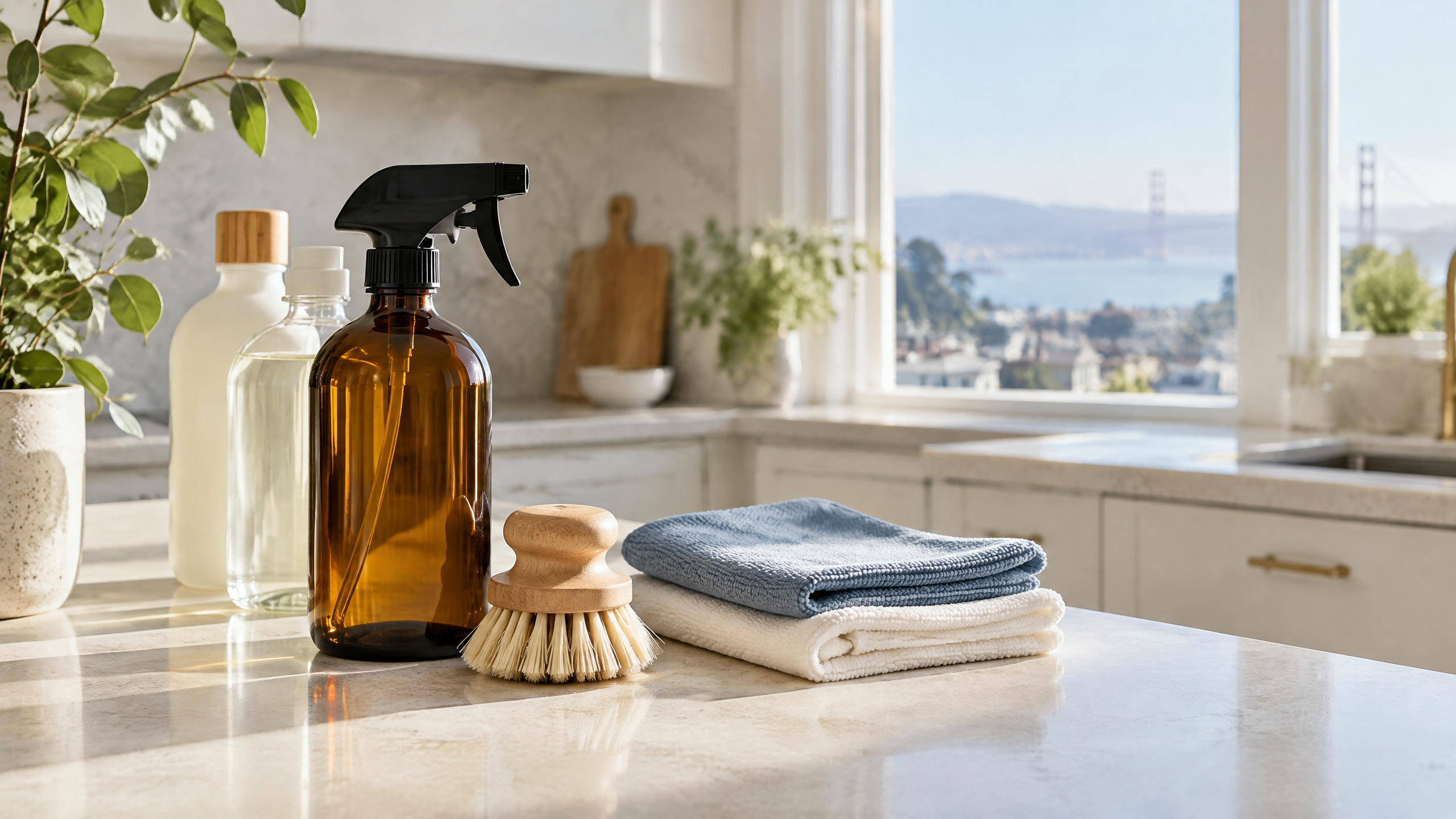
Recurring house cleaning in the Richmond District works best when it is planned around the way a west-side San Francisco home is actually used. Between Ocean Beach walks, school and work commutes, groceries carried up apartment stairs, and the fog that can leave a fine film near windows and entryways, maintenance has a rhythm of its own. A dependable visit schedule lets kitchens, bathrooms, floors, and the high-touch surfaces of daily life receive attention before a weekend becomes a catch-up project.
The neighborhood contains a practical mix of compact flats, elevator buildings, single-family homes, and multi-level residences from the Inner to the Outer Richmond. That variety is why a useful recurring plan begins with the home’s layout, access, household traffic, and surface notes—not a one-size-fits-all promise. This guide explains how Richmond District households can choose a cadence, prepare for a first visit, distinguish maintenance from a deeper reset, and request a clear flat-fee scope.
Planning note: A clear scope makes a cleaning visit more useful. Share access details, the rooms that matter most, and any selected interior tasks before requesting an estimate.
Why a recurring plan fits Richmond District households
The Richmond District’s location between Golden Gate Park and the Pacific makes entry and window-adjacent areas worth watching. Wind can bring in fine outdoor debris, while damp weather and everyday cooking leave their own residue on floors, cabinet fronts, counters, and fixtures. Routine cleaning is not about eliminating every trace of an active household; it is about giving the most-used rooms a repeatable baseline so small tasks do not accumulate into a larger reset.
A recurring schedule also reduces decision fatigue. Instead of deciding each month which room is overdue, a household can reserve routine attention for bathrooms, kitchen surfaces, dusting, and floor care while noting a few rotating priorities. That approach is particularly helpful for residents who share a flat, work from home, host family, or use one room for several roles. A desk area can become a dining table in the evening, and a narrow entry can collect shoes, bags, and park-day grit in a single afternoon.
Consistency is a practical advantage in older buildings as well as updated homes. Painted trim, wood floors, stone or composite counters, and tiled bathrooms benefit from surface-aware care and clear instructions. During the estimate, call out delicate finishes, rooms that are off limits, and areas that need more frequent attention. The aim is a plan that is easy to maintain, rather than a vague list that assumes every room requires identical work at every visit.
Set up a smoother recurring cleaning routine
Start by deciding whether the home needs maintenance or a baseline reset. A standard cleaning is generally the right starting point for a home already kept in reasonable order: it focuses on regular kitchen and bathroom care, dusting, accessible common surfaces, and floors. If detail work has accumulated along baseboards, tracks, fixtures, cabinet fronts, or floor edges, a deep clean may establish a better starting point before recurring visits begin. The estimate should reflect the home’s current condition rather than an idealized checklist.
Next, document the logistics that are easy to overlook in the Richmond District. A team may need the apartment number, buzzer instructions, stair count or elevator procedure, a workable parking note, and a contact method for arrival questions. For homes near busy corridors or park edges, a brief note about loading access can be more useful than a long list of general preferences. Share pet instructions, alarm procedures, and any room that should remain closed before the appointment, whether or not someone plans to be home.
Finally, clear only what blocks safe access. Papers on the counter, loose cords, fragile objects, laundry, and items on bathroom floors can make routine surfaces difficult to reach. There is no need to pre-clean; the helpful preparation is to make priorities visible. A short note such as “focus on the hall bath, kitchen floor, and home-office dusting” helps direct effort. If a task involves the inside of an oven, refrigerator, or cabinets, identify it in advance so it can be included appropriately rather than assumed.
Six priorities for ongoing Richmond District care
A recurring checklist should favor the rooms and transitions that show household use first, then rotate detail work as needed. These six priorities give residents a concrete way to discuss service without turning each visit into an all-day deep clean.
- Kitchen workflow: clean accessible counters, the sink, stovetop exterior, appliance exteriors, cabinet fronts, dining surfaces, and the floor around the cooking and delivery-drop zones. Note special stone, wood, or painted surfaces so the method suits the finish.
- Bathroom reliability: give showers or tubs, toilets, vanities, mirrors, fixtures, and floor edges regular attention. In a shared flat or a home with a frequently used guest bath, designate which bathroom needs the most consistent focus.
- Entry and hallway transitions: address the spots that receive shoes, beach or park debris, wet-weather umbrellas, backpacks, and grocery bags. Keeping these routes in the rotation helps prevent outdoor residue from being carried farther into living areas.
- Living areas and home offices: dust reachable shelves, tables, windowsills, media surfaces, and accessible furniture exteriors, then care for the floors around them. Richmond District residents who work at home can flag equipment-heavy surfaces or meeting rooms that need a predictable pre-visit sequence.
- Bedrooms and lower-traffic rooms: maintain accessible surfaces, bed-area floors, and dresser or nightstand exteriors while communicating which rooms are in use. A guest room does not need the same cadence as a child’s room, and an unused room can be handled according to the agreed scope.
- Rotating detail notes: use a small recurring list for baseboards, interior doors, reachable vents, window tracks, or selected interiors. These tasks belong in the conversation because they may be better suited to a deep clean or a specifically scheduled add-on than to every standard visit.
Know the difference: standard, deep, and move-related cleaning
Standard recurring cleaning is designed to maintain an established baseline. It commonly centers on kitchens, bathrooms, dusting, accessible surfaces, and floors—the work that keeps a lived-in Richmond District home orderly from week to week or every two weeks. It does not mean every object is moved, every cabinet is emptied, or every repair concern can be resolved. Clear priority notes help the team work efficiently within the booked service.
Deep cleaning is the more detailed option when a home needs a reset before maintenance begins or when accumulated detail work deserves focused time. It can include more attention to buildup-prone edges, baseboards, tracks, fixtures, cabinet fronts, interior doors, and other accessible details confirmed in the estimate. A deep clean is not automatically needed for every first visit; the condition of the home, its recent cleaning history, and the requested task list should guide that choice.
Move-related cleaning serves a different moment: a home is empty or nearly empty and the handoff requires attention to areas such as accessible cabinet and appliance interiors when selected, bathrooms, closets, and floors. It is not a substitute for repairs, painting, debris removal, or decisions about a tenancy. For a resident leaving a Richmond District apartment, booking the correct move-out scope early provides time to confirm building access, elevator procedures, parking, and the final walkthrough schedule.
Choose the visit that matches the moment
| Option | Best use |
|---|---|
| Standard recurring cleaning | Best for a home already on a reasonable maintenance rhythm. It focuses on regular kitchen and bathroom care, dusting, accessible surfaces, and floors, with weekly or biweekly scheduling chosen around household traffic. |
| Deep cleaning | Best for establishing a baseline after a busy season, travel, or deferred detail work. It adds attention to buildup-prone edges, fixtures, baseboards, tracks, and selected interiors that are confirmed before service. |
| Move-in or move-out cleaning | Best for an empty or nearly empty residence during a handoff. The scope can include selected cabinet or appliance interiors, bathrooms, closets, and floors, coordinated with building access and timing. |
Richmond District cleaning prices and recurring discounts
Green Planet provides flat-fee estimates based on the home’s layout, bathrooms, condition, access, and selected scope. Standard cleaning starts at $240. For deep cleaning, a small one-bedroom starts at $300; a typical two-bedroom, two-bath home is about $480; and a three-bedroom, two-bath home is about $540. These figures are useful planning points, while the estimate confirms the service that fits the actual home.
Move-related pricing is also scoped to the residence and requested interior work. A move-out clean begins at $240 for a small one-bedroom, and a typical two-bedroom, two-bath move-out is about $360. Because move-related work is tied to the condition of an empty home, building logistics, and the handoff timetable, share whether appliances or cabinets need interior attention and whether elevator reservations or access windows apply.
For a household moving from one-time care to a consistent Clean+ routine, weekly visits receive 25% off and biweekly visits receive 20% off. Frequency is a maintenance decision, not a rule: weekly often suits active homes, frequent cooking, or high-traffic shared spaces, while biweekly can work well when residents manage light tidying between appointments. A scope-specific estimate is the right place to compare the options.
Book with the neighborhood logistics in mind
Before requesting an appointment, make a concise access note: street or building entrance, buzzer or key instructions, stairs or elevator, a workable parking or loading detail, pets, and the best contact for day-of questions. Add the two or three rooms that matter most. In the Richmond’s mix of flats and single-family homes, this information often has more impact on a smooth arrival than trying to write an exhaustive household inventory.
For residents ready to set a maintenance schedule, review recurring house cleaning in the Richmond District and request an estimate built around the home’s condition, priorities, and preferred cadence. Use the estimate conversation to distinguish a standard visit from a deep baseline clean, and mention any selected interior tasks before the appointment is finalized.
If a move, a work change, or a broader neighborhood search affects the plan, the overview of San Francisco recurring house cleaning can help place the Richmond District schedule within the wider city service area. Keep access and priority notes current after the first visit; a simple update is the clearest way to make the routine useful as household needs change.
Frequently asked questions
How often should I schedule recurring house cleaning in the Richmond District?
Weekly service can be a practical fit for active homes, shared bathrooms, frequent cooking, or high foot traffic. Biweekly service often works for households that can handle light tidying between appointments. The best cadence depends on the home’s use, not just its bedroom count.
What is included in a standard recurring cleaning visit?
A standard visit is designed for ongoing upkeep of kitchens, bathrooms, dusting, accessible common surfaces, and floors. Exact tasks depend on the booked scope and priority notes. It is maintenance work rather than a promise to move every object or complete every detail task at each appointment.
Do I need a deep clean before recurring service?
Not always. A deep clean is helpful when detail work has accumulated on edges, tracks, fixtures, baseboards, or cabinet fronts, or when the home needs a stronger baseline. A well-maintained residence may be able to begin with standard recurring cleaning after its needs are reviewed.
How much does recurring cleaning cost in the Richmond District?
Standard cleaning starts at $240. Flat-fee estimates consider the home’s layout, bathrooms, condition, access, and selected scope. Weekly Clean+ visits receive 25% off and biweekly visits receive 20% off, with the estimate confirming the applicable recurring plan.
What should I share about apartment or building access?
Provide the entrance and unit details, buzzer or key process, stair or elevator information, parking or loading guidance, pet notes, and a contact for arrival questions. If the building requires an elevator reservation or has a narrow access window, share that before the service date.
How is move-out cleaning different from recurring cleaning?
Move-out cleaning is planned for an empty or nearly empty home and may include selected cabinet or appliance interiors, closets, bathrooms, and floors. Recurring cleaning maintains an occupied home’s routine surfaces. Move-out work is a cleaning scope, not a substitute for repairs or tenancy decisions.
Ready to plan the right visit? Visit recurring house cleaning in the Richmond District or request a flat-fee estimate for your home.
Let Green Planet Handle the Cleaning
Family-owned since 2010. 100% eco-friendly. Greentified™ Guarantee — if you're not happy, we re-clean for free within 24 hours.
Serving Marin County, San Francisco, Sonoma, Napa, San Mateo & Contra Costa.