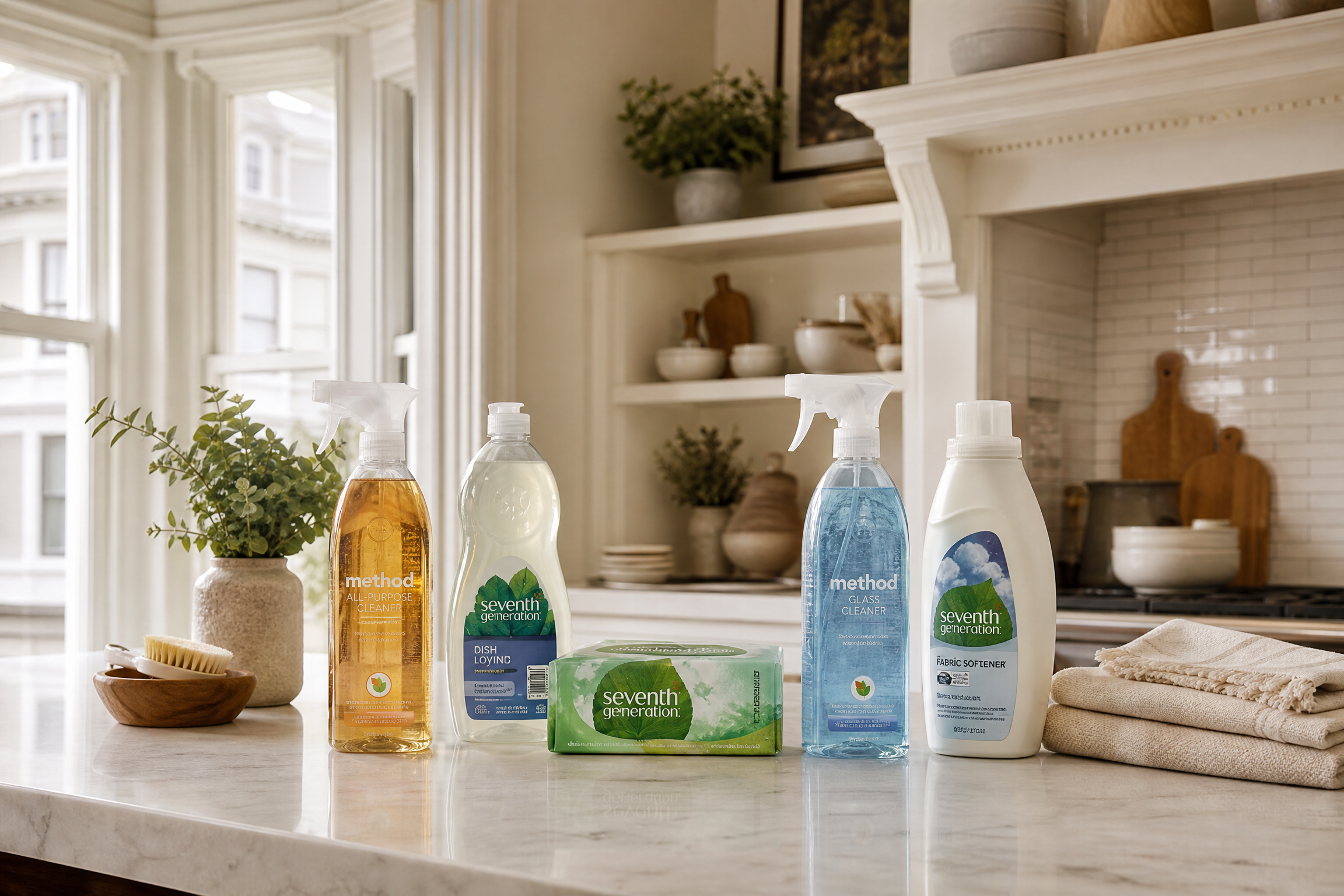


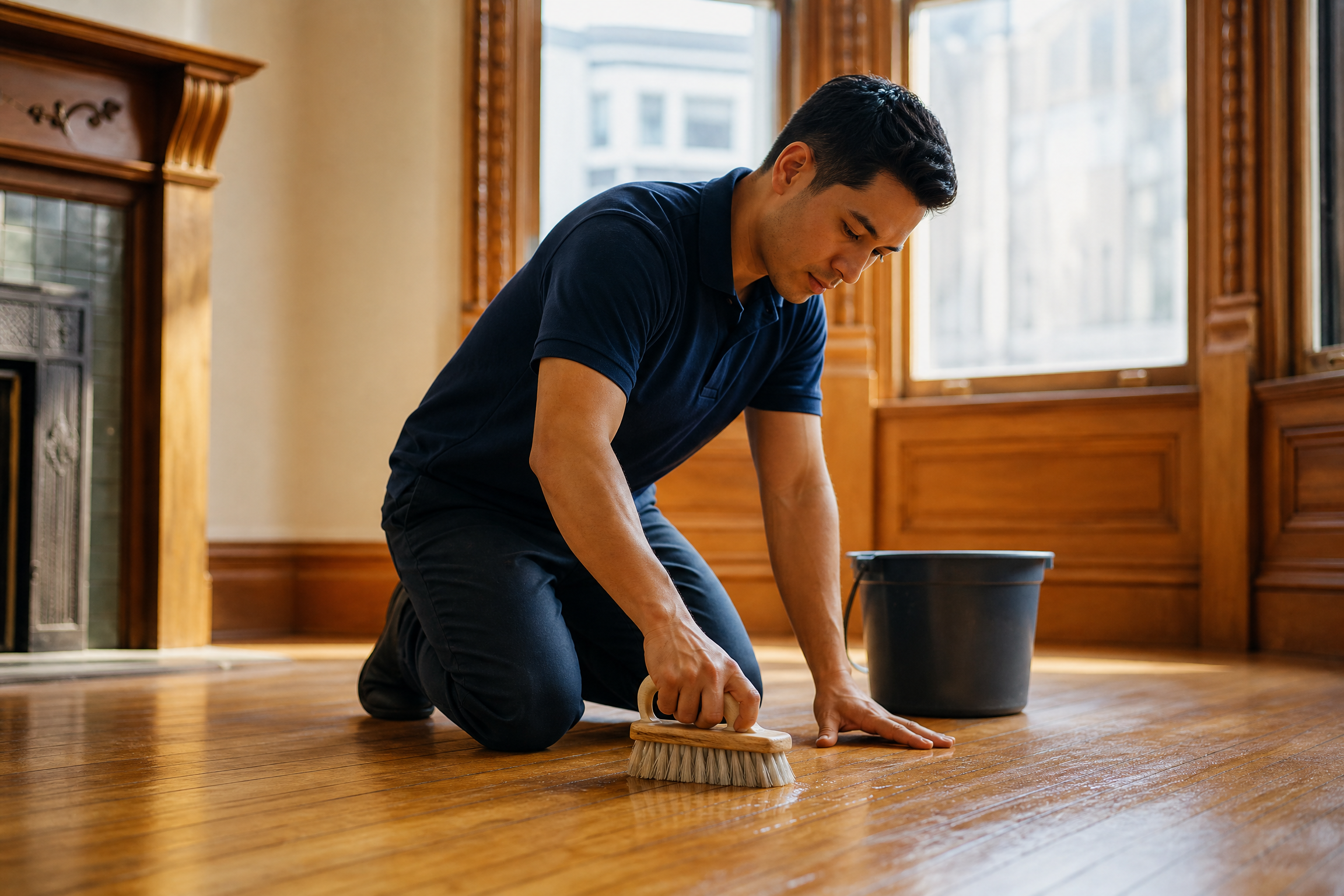
Once the odor source is addressed, regular surface care helps prevent the same buildup from returning. Consider house cleaning in San Francisco, an ongoing plan for a Mission District home, or a Noe Valley house-cleaning schedule.
San Francisco is one of the most pet-friendly cities in the country — more dogs than children, according to most estimates. But living with pets in a Victorian flat or a Noe Valley condo means dealing with something most cleaning guides gloss over: pet odor and dander don't just sit on the surface. They work their way into hardwood floors, Victorian plaster walls, and the fabric of your life. This guide covers how to actually get rid of pet smells, not just mask them.
Why Pet Odor Is Different From Regular Household Smells
Most household odors — cooking smells, mildew, stale air — respond well to standard cleaning. Pet odor is different because the primary culprits are protein-based compounds: uric acid from urine, dander proteins, and sebaceous oils from fur and skin. These compounds bond to porous surfaces and can't be broken down by soap and water alone. They require enzymatic cleaners that literally digest the organic matter, or heat and pressure (steam cleaning) to release them from fibers.
In older San Francisco homes, this is especially challenging. Victorian-era hardwood floors often have gaps between boards where urine seeps into the subfloor. Plaster walls absorb odors differently than modern drywall. And the city's famous fog and humidity can reactivate dried odors on humid days — which is why a home that smelled fine in summer can suddenly smell like a kennel in October.
"The mistake most people make is using a scented cleaner to cover the smell. That works for about 48 hours. Enzymatic cleaners are the only thing that actually eliminates the odor source — everything else is just perfume on top of a problem."
— Green Planet Cleaning team, San Francisco
The Five Main Sources of Pet Odor (and How Hard Each Is to Remove)
| Odor Source | Where It Hides | Difficulty to Remove |
|---|---|---|
| Urine (dried) | Hardwood floors, grout, baseboards, carpet padding | High — penetrates porous materials |
| Dander & fur | Upholstery, HVAC filters, curtains, bedding | Moderate — airborne, settles everywhere |
| Saliva & paw oils | Walls at dog height, door frames, furniture edges | Low-moderate — surface level |
| Anal gland secretions | Carpet, rugs, furniture | High — requires enzymatic treatment |
| Wet dog smell | Rugs, upholstery, car interiors | Moderate — resolves with deep cleaning |
The Right Tool for the Job: Enzymatic Cleaners Explained
Enzymatic cleaners work by deploying specific enzymes — protease, lipase, amylase — that break down the molecular structure of organic stains and odors. The process takes time: most enzymatic cleaners need to stay wet on the surface for 10–15 minutes to be effective. Blotting up the liquid too soon stops the enzymatic reaction before it's complete.
For San Francisco homes, we recommend plant-based enzymatic cleaners that are safe for hardwood and don't leave residue on Victorian-era painted surfaces. Brands like Biokleen Bac-Out and Nature's Miracle work well. Avoid products with bleach or ammonia — ammonia smells similar to urine and can actually attract pets back to the same spot.
For severe urine penetration into hardwood subfloors, the only permanent solution is sealing the affected boards with an oil-based primer (like Kilz) before refinishing. This is a job for a flooring professional, but knowing when you've crossed that threshold saves you from endless cleaning cycles that never fully work.
Ready for a Spotless Home?
Get a free, no-obligation estimate in 60 seconds. Eco-friendly products, Greentified™ re-clean guarantee, and a team you can trust.
Get My Free Estimate →Room-by-Room Pet Cleaning Checklist
Select a room below to see the specific tasks required for a thorough pet odor treatment. Every room has different challenges — hardwood floors need different care than carpets, and upholstered furniture requires a different approach than bare walls.
Hardwood floors — What to Do:
- Enzymatic cleaner on any urine spots
- Buff with pH-neutral hardwood cleaner
- Inspect for staining under rugs
Pet Dander and Air Quality: The Hidden Problem
Pet dander — microscopic flakes of skin — is the primary trigger for pet allergies, and it's far more persistent than fur. Dander particles are tiny enough to stay airborne for hours and can remain in a home for months after a pet has left. In San Francisco's older housing stock, dander accumulates in wall cavities, under baseboards, and in HVAC systems that haven't been serviced recently.
The most effective dander reduction strategy combines three things: HEPA vacuuming (which captures particles down to 0.3 microns), HVAC filter replacement (use MERV 11 or higher), and air purification with a true HEPA filter running continuously. Ionic air purifiers and ozone generators are not recommended — ozone is a lung irritant and doesn't address the source of the problem.
Pet Cleaning for SF Renters: What Landlords Actually Inspect
San Francisco landlords are experienced at identifying pet damage, and many have specific clauses in leases about pet deposits and cleaning requirements. Under California Civil Code Section 1950.5, landlords can deduct from your security deposit for pet-related damage beyond normal wear and tear. This includes urine staining on hardwood floors, pet hair embedded in carpet, and persistent odor that requires professional remediation.
The standard landlord inspection covers: floors (especially under rugs and furniture), walls at pet height, window sills and tracks (where pets sit and leave oils), and the HVAC system. A professional pet cleaning before move-out — documented with a receipt — is your strongest protection against these deductions. Most landlords will accept a professional cleaning receipt as evidence that the unit was returned in acceptable condition.
When to Call a Professional (and When DIY Is Fine)
For routine maintenance — monthly vacuuming, wiping down surfaces, washing pet bedding — DIY is completely adequate. Where professional cleaning becomes necessary is when odors have penetrated porous materials, when you're preparing for a move-out inspection, or when a pet has had repeated accidents in the same area.
| Situation | DIY or Professional? | Why |
|---|---|---|
| Routine weekly maintenance | DIY | Standard vacuuming and wiping is sufficient |
| Single accident on hardwood | DIY | Enzymatic cleaner handles fresh spots well |
| Repeated accidents in same area | Professional | Odor has likely penetrated subfloor |
| Move-out cleaning with pets | Professional | Landlord inspection requires documented clean |
| Allergy symptoms in household | Professional | HEPA equipment and dander treatment needed |
| Odor returns after DIY cleaning | Professional | Source is deeper than surface level |
Frequently Asked Questions
How do I find pet urine spots I can't smell but my landlord might?
Use a UV black light in a darkened room. Dried urine fluoresces bright yellow-green under UV light. This reveals spots that are invisible in normal light and odorless to humans but detectable by professional inspectors. Mark each spot with painter's tape before treating.
Can I use vinegar to remove pet odors?
White vinegar neutralizes some odors temporarily, but it doesn't break down the uric acid crystals in pet urine. It works for surface-level smells on hard surfaces, but for anything that has soaked into flooring or fabric, you need an enzymatic cleaner. Vinegar also has a strong smell of its own that takes time to dissipate.
How long does pet dander stay in a home after the pet is gone?
Pet dander can persist in a home for 4–6 months after a pet has left, even with regular cleaning. It settles into HVAC systems, wall cavities, and soft furnishings. A thorough professional clean combined with HVAC filter replacement and air purification can reduce this significantly within a few weeks.
My San Francisco Victorian has gaps between the hardwood boards. How do I treat urine that's soaked in?
This is one of the most challenging situations. First, treat the surface with enzymatic cleaner and let it penetrate for 15–20 minutes. If the odor persists after multiple treatments, the urine has likely reached the subfloor. At that point, you need to seal the boards with an oil-based primer before any refinishing. In severe cases, the affected boards may need to be replaced.
Does Green Planet Cleaning handle pet odor treatments?
Yes. Our deep cleaning service includes enzymatic treatment for pet stains, HEPA vacuuming for dander, and surface deodorization. For move-out cleanings in pet households, we provide a detailed receipt that documents all pet-specific treatments — which most SF landlords accept as evidence of a professional clean.
How much does professional pet odor cleaning cost in San Francisco?
A deep cleaning with pet odor treatment for a 1-bedroom SF apartment starts at $300. For larger homes (3BR+) or severe odor situations, expect $540–$660+. Move-out cleanings with pet treatment start at $240 for a studio and $420+ for a 3-bedroom home, depending on the size of the unit and the extent of the pet presence.
Let Green Planet Handle the Cleaning
Family-owned since 2010. 100% eco-friendly. Greentified™ Guarantee — if you're not happy, we re-clean for free within 24 hours.
Serving Marin County, San Francisco, Sonoma, Napa, San Mateo & Contra Costa.