

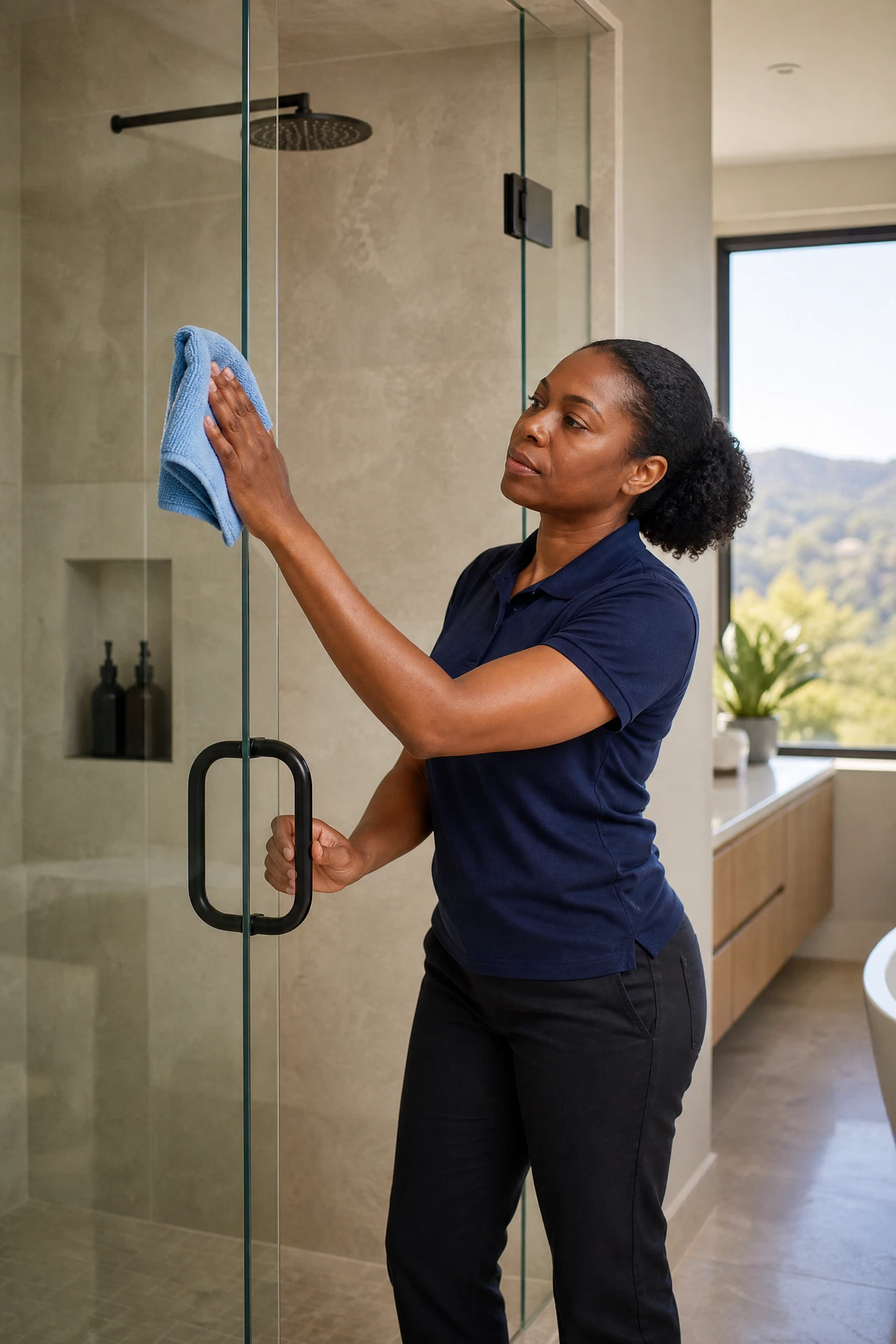
Few features transform a bathroom as dramatically as pristine, crystal-clear glass shower doors. They create an immediate sense of spaciousness, allow natural light to flood enclosed shower stalls, and lend a sleek, modern aesthetic to any home. Yet, within weeks of installation, those same sparkling panes can become cloudy, dull, and marred by chalky white mineral deposits and stubborn soap scum.
Cleaning glass shower doors frustrates many homeowners because standard household window cleaners and casual wiping fail against baked-on mineral scale. Understanding the chemistry behind water spots, selecting the correct non-toxic cleaning agents, and implementing a consistent maintenance routine make achieving and maintaining professional results straightforward. This comprehensive guide explores the root causes of shower door buildup, step-by-step restoration protocols, preventative maintenance strategies, and expert answers to common questions.
Interactive Shower Glass Assessment & Protocol Builder
Select your shower door's current condition below to generate a tailored cleaning protocol, required products, estimated time, and a customized maintenance schedule.
Moderate Hard Water Spots & Mineral Rings
Visible white spots, mineral droplet outlines, and slight roughness along the lower half of the shower glass enclosure.
- Prepare a cleaning paste of baking soda and warm water, or thicken warm white vinegar with a tablespoon of cornstarch for vertical cling.
- Apply the paste generously to water-spotted and cloudy glass areas using a non-scratch nylon sponge.
- Let the paste dwell for 10 to 15 minutes so the mild acid and alkaline agents can soften calcium carbonate bonds.
- Scrub gently in circular motions, paying special attention to stubborn mineral rings near the bottom sweep.
- Rinse thoroughly with clean warm water and dry completely with a clean microfiber towel.
Customizable Shower Maintenance Calendar
Select a timeframe below to view and check off essential maintenance tasks designed to prevent mineral buildup permanently.
The 30-Second Squeegee Sweep
Use a clean rubber squeegee on all interior glass surfaces immediately after every shower while the glass is still warm and wet.
Quick Hardware Dry
Wipe down metal handles, hinges, and lower framing tracks with a dry microfiber cloth to prevent water droplet evaporation marks.
The Anatomy of Shower Door Buildup: Soap Scum vs. Hard Water Scale
To effectively clean glass shower doors, one must first understand what causes them to become opaque. The cloudy film and rough texture on shower glass are rarely caused by a single substance. Instead, they represent a complex bonding of organic and inorganic materials that accumulate with every single shower.
Soap scum is an insoluble greyish-white solid formed when fatty acids found in bar soaps, body washes, and shampoos react chemically with mineral ions (primarily calcium and magnesium) dissolved in tap water. When shower water mixes with soap lather, these metallic salts bind to the organic fats, creating a sticky film that adheres tenaciously to glass pores. Over time, as hot water evaporates repeatedly on the vertical surface, this film bakes into a resilient matrix.
Hard water mineral scale, on the other hand, is entirely inorganic. Municipal water supplies contain varying concentrations of dissolved minerals like calcium carbonate, magnesium sulfate, and silica. When water droplets sit on glass and evaporate, the water molecules turn into vapor, but the mineral solids are left behind. As droplet after droplet evaporates in the exact same spot, microscopic rings of mineral crystals stack on top of one another, forming an opaque crust that behaves almost like microscopic limestone.
Standard commercial glass cleaners designed for windows are formulated primarily to cut through light dust and airborne grease on exterior glass. They lack the necessary acidity to break down calcium carbonate bonds or the surfactant strength to emulsify baked-on soap scum. Consequently, spraying Windex on heavily spotted shower glass yields little more than temporary smearing. Professional cleaning requires targeted chemical action: mild acids to dissolve minerals and alkaline surfactants to lift organic residues.
Essential Tools and Safe Cleaning Products: What Works and What Destroys Glass
Using the wrong tools or harsh industrial chemicals can permanently ruin shower glass and surrounding hardware. Tempered glass used in modern enclosures is remarkably tough against blunt impact, but its surface can be easily scratched by abrasive minerals, metal wool, and harsh scouring powders.
| Cleaning Material | Recommended Choice | Dangerous Alternative to Avoid |
|---|---|---|
| Scouring Pads | Non-scratch nylon pads (e.g., Scotch-Brite blue) | Steel wool or abrasive scouring powders (scratches glass permanently) |
| Descaling Acids | White vinegar, 10% citric acid solution | Muriatic acid or concentrated hydrochloric acid (corrodes metal framing) |
| Scrapers | Plastic razor blade scrapers | Metal razor blades held flat (gouge and scratch tempered glass) |
| Drying & Buffing | Waffle-weave microfiber towels | Standard paper towels (leave lint and micro-streaks) |
| Hardware Care | Damp microfiber cloth with mild dish soap | Chlorine bleach or ammonia (pits chrome and matte black finishes) |
| Protective Sealants | Hydrophobic ceramic or silicone glass spray | Automotive wax with silicone (attracts dust and turns yellow) |
Always prioritize safety when working with acidic descalers. While white vinegar and citric acid are non-toxic and environmentally safe, wearing rubber gloves protects your skin from natural oils being stripped away during extended scrubbing sessions. Ensure adequate bathroom ventilation by turning on the exhaust fan or opening a window.
Step-by-Step Deep Cleaning Guide for Glass Shower Doors
When tackling a shower door that has not been thoroughly cleaned in months, follow this proven five-step professional restoration protocol. Working systematically ensures every square inch of glass and hardware receives proper attention.
Preparation, Inspection, and Protection
Start by clearing all shampoo bottles, soaps, and accessories from the shower enclosure. Inspect the glass for existing chips or deep scratches. Tape off delicate natural stone surrounds or sensitive brass fixtures with painter's tape, as acidic descalers can etch calcareous stone like marble or travertine instantly.
The Acidic Dwell Application
Warm white vinegar in the microwave for 45 seconds or dissolve 4 tablespoons of citric acid powder into 16 ounces of warm water. Pour the solution into a spray pump bottle and saturate both sides of the glass doors generously. The warmth accelerates the chemical reaction. Allow the solution to dwell undisturbed for 10 to 15 minutes, reapplying mist if any areas begin to dry out.
Mechanical Scrubbing and Mineral Removal
Take a non-scratch nylon scouring pad dipped in baking soda or a mild abrasive paste and work across the glass in tight circular motions. For stubborn, raised mineral crusts along the bottom edges, angle a plastic razor blade scraper at 45 degrees against the wet glass and gently push forward to lift the mineral deposits without scratching.
Thorough Rinsing and Neutralization
Rinse all glass panels and metal tracks thoroughly with clean warm water from a detachable showerhead or a bucket. Rinsing washes away loosened mineral sludge and neutralizes residual acid, preventing any streaking or chemical residue from drying on the frame.
Drying, Buffing, and Hydrophobic Sealing
Immediately dry the glass using a clean rubber squeegee, pulling water downward in overlapping strokes. Follow up by buffing the entire surface with a dry waffle-weave microfiber towel. For long-term protection, spray a hydrophobic glass sealant onto a clean cloth, wipe it evenly across the dry glass, let it cure for 10 minutes, and buff to a brilliant shine.
Specialized Techniques: Framed, Frameless, Frosted, and Textured Glass
Not all shower enclosures feature smooth, clear tempered glass. Different manufacturing styles require tailored cleaning approaches to prevent accidental damage to frames, seals, and decorative finishes.
Frameless Glass Enclosures
- Frameless doors rely on heavy metal hinges and clips rather than continuous aluminum channels.
- Pay close attention to silicone sealant joints around fixed glass panels; avoid applying aggressive acidic cleaners directly onto fresh silicone caulk to prevent premature degradation.
- Use a soft toothbrush dipped in baking soda to clean around hinge crevices where soap scum accumulates out of sight.
Framed Aluminum & Matte Black Doors
- Aluminum framing and popular matte black or brushed brass finishes are sensitive to harsh chemicals.
- Never use chlorine bleach, oven cleaner, or abrasive scouring pads on metal frames, as they strip anodized and powder-coated finishes permanently.
- Wipe metal frames with a damp microfiber cloth and mild dish soap immediately after cleaning the glass.
Frosted and Textured Glass
- Frosted glass features an etched or sandblasted textured side that traps soap oils and mineral deposits much faster than smooth glass.
- Always clean textured glass in the direction of the pattern grooves using a soft-bristled nylon brush rather than a flat sponge.
- Ensure all baking soda or paste residues are completely rinsed out of textured recesses, as dried white powder in frosted grooves looks unsightly.
The Secret to Keeping Glass Clear: Daily Prevention and Hydrophobic Sealants
The single most effective way to eliminate hours of heavy scrubbing is to stop water spots before they form. Professional cleaners agree that restoration is difficult, but prevention takes less than a minute a day.
The 30-Second Squeegee Rule: Keep a high-quality silicone or rubber squeegee hanging inside the shower stall. After every single shower, while the glass is still hot and wet, take 30 seconds to pull the water down from the top of the glass to the bottom sweep. By removing the water droplets before they evaporate, you eliminate 95% of mineral scale formation.
Hydrophobic Glass Coatings: Applying a professional-grade hydrophobic sealant transforms the glass surface energy. Water droplets no longer flatten out and grip the glass pores; instead, they bead up into tight spheres that slide effortlessly down the vertical surface under their own weight. Reapplying a quality sealant every 3 to 6 months ensures your glass remains virtually self-cleaning between routine wipedowns.
Four Common Mistakes That Ruin Shower Glass
Even well-intentioned homeowners frequently make critical errors that damage shower enclosures or create more work in the long run. Avoid these four common pitfalls:
Using Steel Wool or Metal Scrapers Flat
Many believe steel wool (even Grade 0000) is safe on glass. In reality, hard steel fibers can leave micro-scratches on tempered glass that permanently trap soap scum. Similarly, holding a metal razor blade flat against glass will gouge the surface.
Allowing Acidic Cleaners to Sit on Metal Hardware
While vinegar and citric acid work wonders on glass, letting them puddle on chrome, brass, or matte black hinges and handles will corrode protective coatings and cause pitting.
Skipping the Rinse Step
Wiping cleaning solutions onto glass and letting them air-dry leaves chemical films and loosened mineral sludge behind. Always rinse thoroughly with clean water before squeegeeing.
Relying Solely on Standard Window Spray
Windex and similar commercial window sprays lack the chemical strength to dissolve calcium carbonate or emulsify body oils. Using them on heavily soiled shower doors only results in endless streaks.
Frequently Asked Questions
How often should glass shower doors be deeply cleaned?
For most households, a thorough deep clean every 2 to 4 weeks is sufficient, provided you use a squeegee daily. If you have extremely hard water or do not use a squeegee, bi-weekly deep cleaning with an acidic descaler will prevent heavy mineral crust from forming.
Can I use vinegar on all types of shower glass and surrounding tile?
White vinegar is completely safe on glass, porcelain, ceramic tile, and fiberglass. However, you must NEVER use vinegar or acidic cleaners on natural stone surrounds such as marble, travertine, limestone, or slate, as the acid will permanently etch and dull the stone finish.
Why do my shower doors still look cloudy even after I clean them?
If cloudy spots remain after standard cleaning, the minerals have likely begun to etch into the microscopic pores of the glass itself, or soap scum has hardened into a thick calcium layer. This requires a professional-grade mineral descaler, a plastic razor scraper, and a restorative polishing compound.
Is it safe to use commercial oven cleaner to remove shower soap scum?
While some internet tutorials recommend oven cleaner for baked-on shower grime due to its strong alkalinity, professional cleaners strongly advise against it. Oven cleaners can severely discolor and pit aluminum framing, dissolve silicone caulk, and release caustic fumes in confined bathroom spaces.
How do I prevent black mold and mildew from growing around shower door gaskets?
Black mold thrives in damp, unventilated rubber seals and aluminum tracks. Run your bathroom exhaust fan for at least 20 minutes after every shower, wipe down rubber gaskets weekly with an eco-friendly hydrogen peroxide or vinegar spray, and ensure water does not pool in bottom tracks.
What is the best household remedy for removing stubborn water spots?
A thick paste made from equal parts baking soda and white vinegar or hydrogen peroxide works exceptionally well. The bubbling chemical reaction loosens mineral bonds, while the gentle abrasive action of baking soda polishes the glass without scratching.
Does applying car wax to shower glass actually work?
Automotive car wax containing carnauba or silicone was historically used as a makeshift water repellent on shower glass. However, modern professional hydrophobic ceramic coatings or dedicated glass sealants perform significantly better without attracting sticky dust and yellowing over time.
Ready for Sparkling, Spotless Glass Without the Elbow Grease?
Let Green Planet Cleaning's professional teams handle the hard work. Enjoy immaculate, streak-free bathrooms with our trusted eco-friendly cleaning services.
Book Online Today