

Walls are one of the most overlooked surfaces in any home. We vacuum floors, scrub counters, and wipe down appliances — but walls? They tend to get ignored until the grime becomes impossible to miss. The truth is, your walls accumulate dust, grease, fingerprints, pet dander, and airborne particles every single day. Knowing how often to clean them — and how to do it without damaging the paint — is one of the most underrated home maintenance skills you can have.
The General Rule: How Often Should You Clean Your Walls?
For most households, a full wall cleaning once or twice a year is sufficient for low-traffic areas. High-traffic zones — kitchens, hallways, entryways, and children's rooms — benefit from a light wipe-down every one to three months. Here's a more detailed breakdown:
| Room / Area | Recommended Frequency | Primary Culprits |
|---|---|---|
| Kitchen | Monthly | Grease, steam, food splatter |
| Bathroom | Monthly | Mold, mildew, soap scum, humidity |
| Children's rooms | Every 1–3 months | Crayon, fingerprints, food |
| Entryway / hallway | Every 2–3 months | Scuffs, handprints, dirt |
| Living room | Every 3–6 months | Dust, pet dander, fingerprints |
| Bedrooms | Every 6 months | Dust, allergens |
| Basement / utility rooms | Annually | Dust, cobwebs, moisture |
Why Wall Cleaning Matters More Than You Think
Dirty walls aren't just an aesthetic problem. Over time, accumulated grime on walls can:
- Degrade indoor air quality — dust, mold spores, and pet dander cling to walls and get redistributed into the air every time someone walks by or turns on a fan.
- Shorten the life of your paint — grease and oils from cooking or skin contact break down paint binders over time, causing paint to peel or discolor prematurely.
- Allow mold to take hold — especially in bathrooms and kitchens, where humidity is high. Mold on walls is a health hazard and can spread quickly if not addressed.
- Make your home feel smaller and darker — grimy walls absorb light rather than reflecting it, making rooms feel dingy even with good lighting.
Ready for a Spotless Home?
Get a free, no-obligation estimate in 60 seconds. Eco-friendly products, Greentified™ re-clean guarantee, and a team you can trust.
Get My Free Estimate →How to Clean Walls Without Damaging the Paint
The biggest fear most homeowners have about cleaning walls is removing the paint along with the dirt. Here's how to clean effectively without that risk:
1. Start with Dry Dusting
Before any wet cleaning, use a microfiber duster or a clean, dry mop with a microfiber pad to remove loose dust and cobwebs from top to bottom. This prevents wet dust from turning into muddy streaks when you apply your cleaning solution.
2. Choose the Right Cleaning Solution
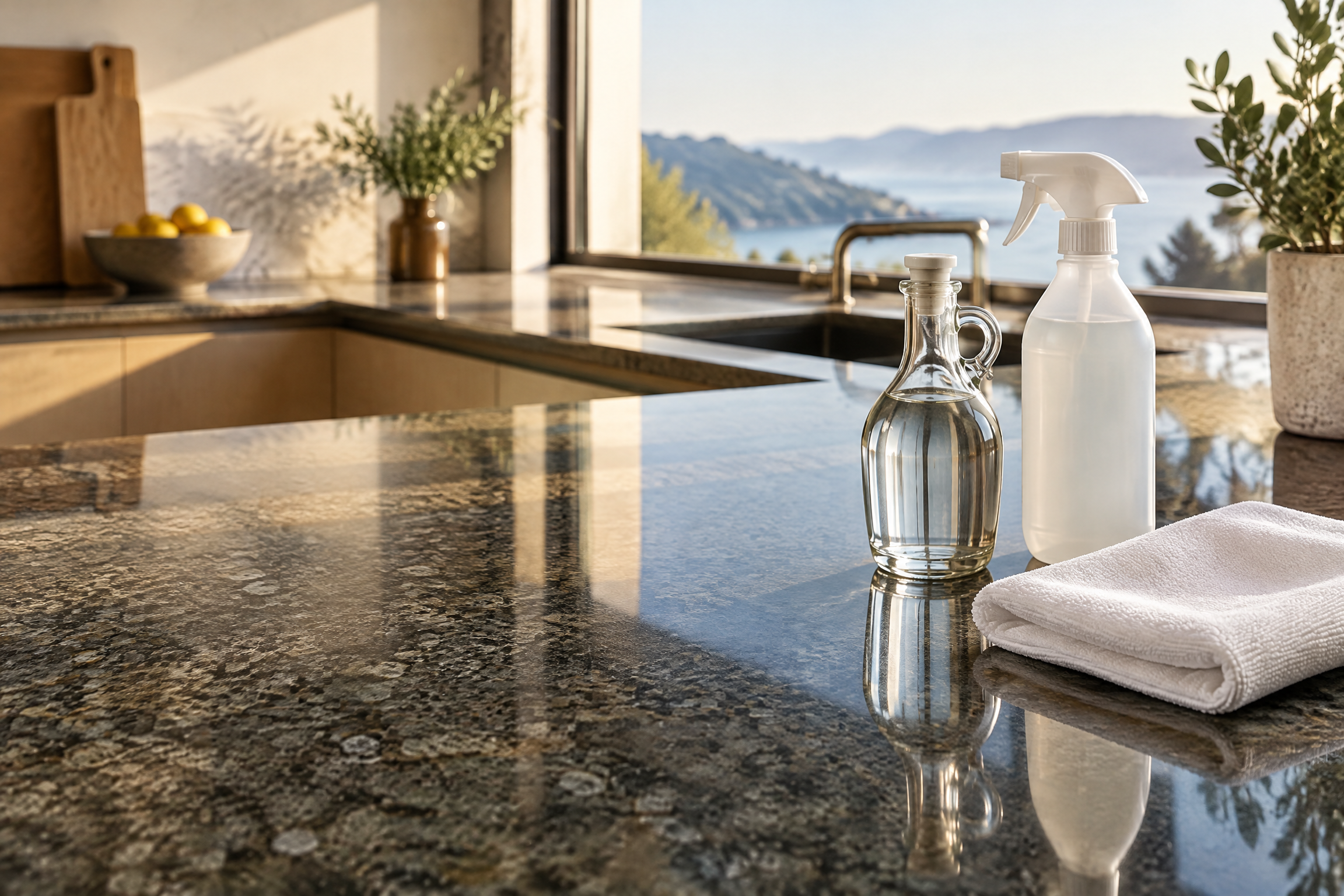
For most painted walls, a simple solution of warm water with a few drops of dish soap is all you need. For tougher stains, add a small amount of white vinegar. Avoid bleach on painted surfaces unless you're dealing with mold on a bathroom wall — and even then, dilute it heavily (1 part bleach to 10 parts water).
3. Test in a Hidden Spot
Always test your cleaning solution in an inconspicuous area — behind a door, inside a closet — before tackling visible walls. Some paints, especially flat or matte finishes, are more sensitive to moisture and can leave water marks or sheen changes.
4. Work in Sections from Top to Bottom
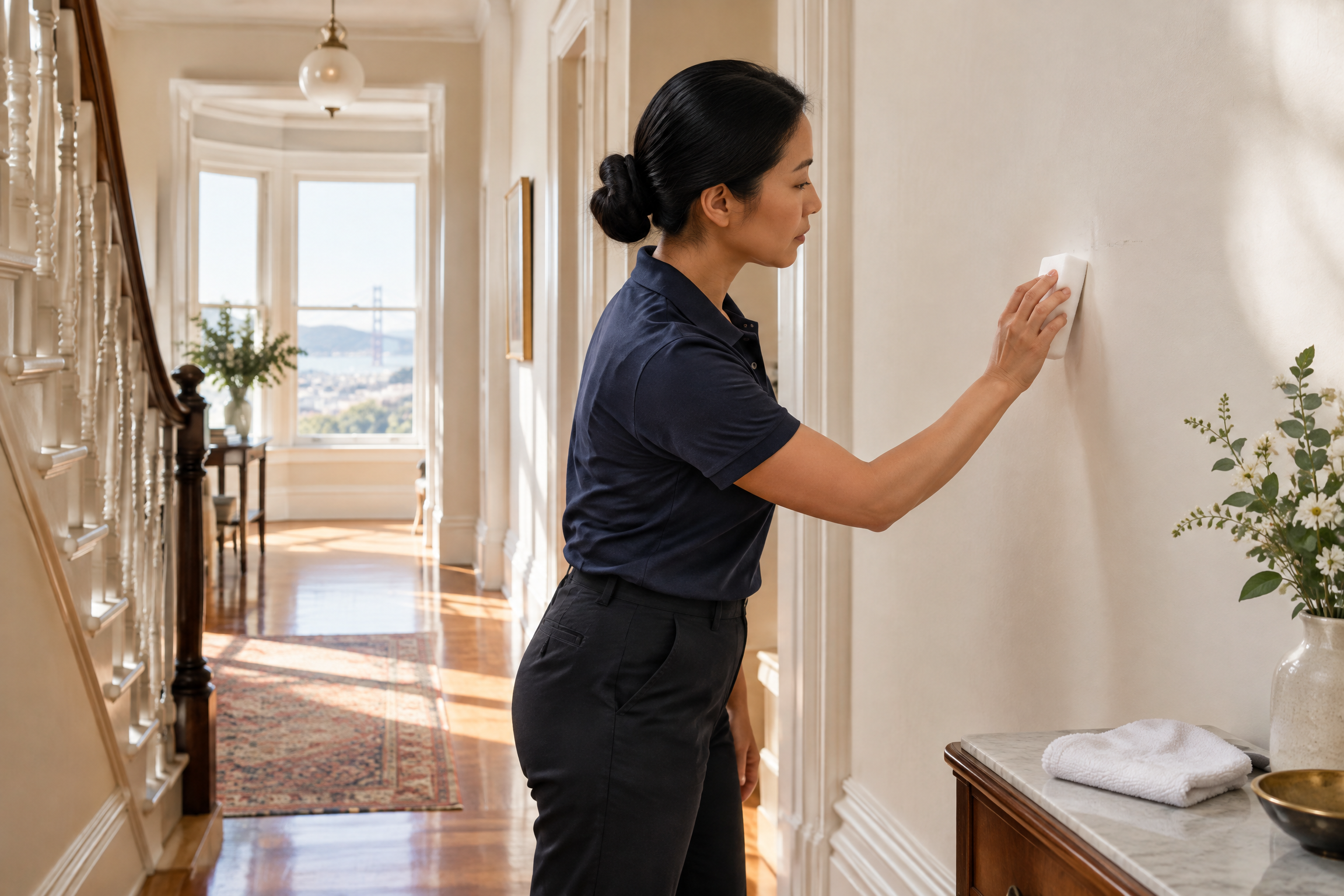
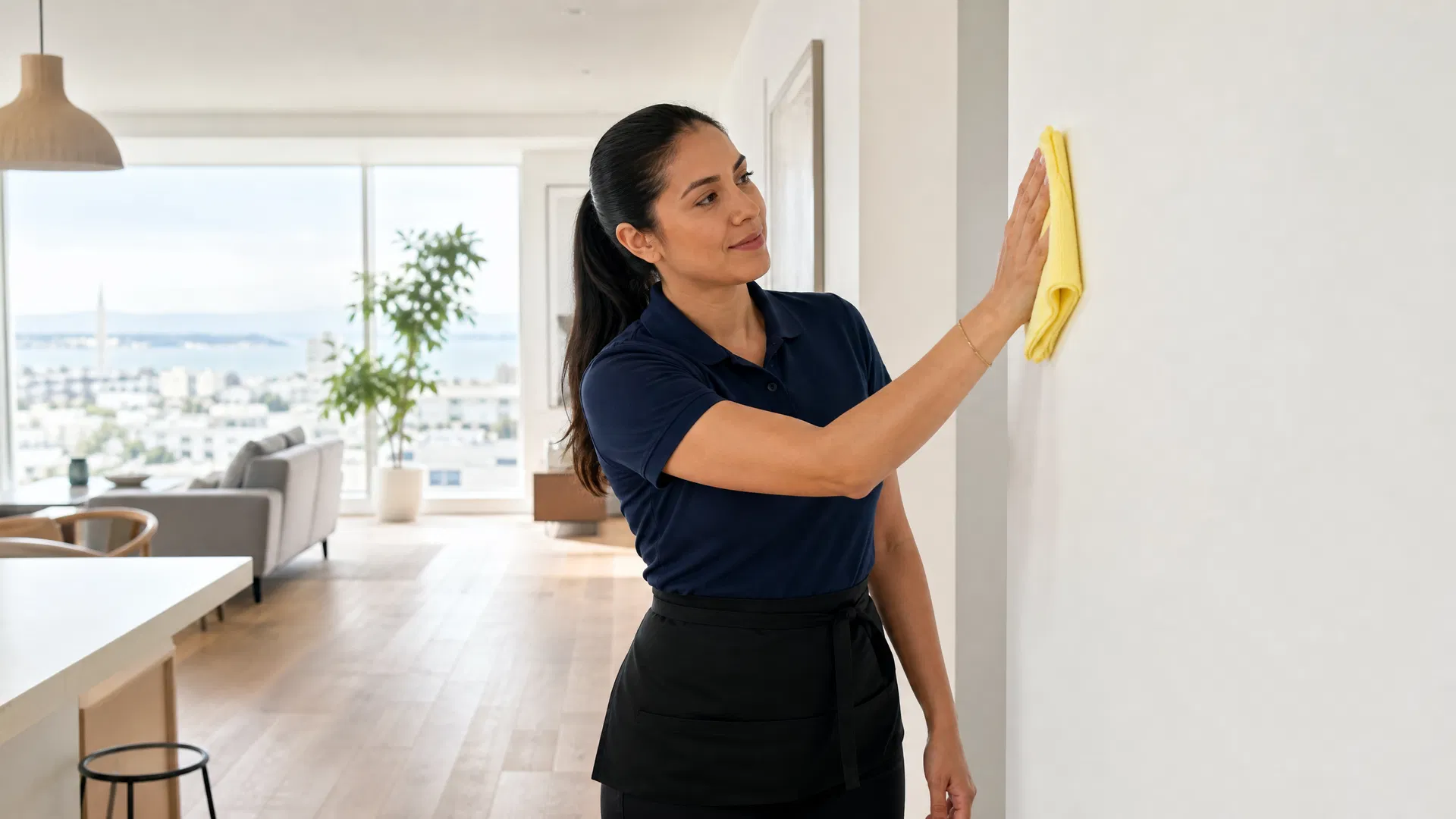
Start at the top of the wall and work downward. This prevents dirty water from dripping onto already-cleaned areas. Use a soft sponge or microfiber cloth — never a scrubbing pad, which can remove paint.
5. Rinse and Dry Promptly
After cleaning each section, wipe with a clean damp cloth to remove soap residue, then immediately dry with a clean towel. Leaving walls wet for too long can cause paint to bubble or peel, especially in humid climates like San Francisco.
Paint Finish Matters: Matching Your Method to Your Walls
Different paint finishes have very different tolerances for moisture and scrubbing:
| Paint Finish | Durability | Cleaning Method |
|---|---|---|
| Flat / Matte | Low — absorbs moisture easily | Barely damp cloth, gentle dabbing only |
| Eggshell | Moderate | Damp sponge, light pressure |
| Satin | Good | Damp cloth with mild soap, gentle scrubbing |
| Semi-gloss | Very good | Soap and water, moderate scrubbing |
| Gloss / High-gloss | Excellent | Most cleaning methods safe |
Special Situations: When to Clean Walls More Often
Homes with Pets
Dogs and cats leave oils, dander, and fur on walls — especially at shoulder height and near doorways where they brush past. If you have pets, plan to wipe down lower wall sections every month or two, particularly in hallways and near their sleeping areas.
Homes with Young Children
Children are wall artists. Crayon, marker, food, and sticky fingers are a constant reality. Keep a small spray bottle of diluted dish soap and a microfiber cloth in a convenient spot for quick spot-cleaning throughout the week. A full wash every one to two months keeps things manageable.
Homes with Smokers
Cigarette smoke leaves a yellowish, sticky film on walls that builds up quickly. Walls in smoking households need cleaning every one to two months with a degreaser solution. Over time, nicotine staining may require a primer coat before repainting.
Homes Near Busy Streets
In urban environments like San Francisco, fine particulate matter from traffic can infiltrate even well-sealed homes and deposit on walls near windows and vents. Quarterly dusting and semi-annual washing is recommended for these homes.
After Illness
After a household member has been sick with a contagious illness, wipe down high-touch wall areas (light switches, door frames, around door handles) with a disinfecting solution to reduce the spread of pathogens.
Seasonal Wall Cleaning: Building It Into Your Routine
The most effective approach is to integrate wall cleaning into your seasonal deep cleaning schedule:
- Spring: Full wall wash throughout the home. Open windows for ventilation. Address any mold or mildew from winter humidity.
- Summer: Spot-clean kitchen walls monthly due to increased cooking activity.
- Fall: Dust all walls before closing up the house for winter. Check bathroom walls for early signs of mold.
- Winter: Spot-clean as needed. Focus on entryways where wet coats and boots bring in extra grime.
Frequently Asked Questions
How often should you wash the walls in your house?
For most rooms, a thorough wall cleaning once or twice a year is sufficient. Kitchens and bathrooms benefit from monthly attention, while living rooms and bedrooms can go three to six months between full cleanings. High-traffic areas like hallways and entryways should be spot-cleaned regularly and washed every two to three months.
What is the best way to clean painted walls?
Start by dry-dusting from top to bottom with a microfiber cloth or duster. Then use a soft sponge or microfiber cloth dampened with warm water and a few drops of dish soap. Work in small sections, rinse with a clean damp cloth, and dry immediately. Always test in a hidden area first, especially with flat or matte paint.
Can you use a Magic Eraser on painted walls?
Magic Erasers (melamine foam) work well on scuffs and marks but should be used with caution on painted walls. They are mildly abrasive and can remove paint sheen, especially on flat or eggshell finishes. Use them only for spot-cleaning stubborn marks, not for general wall washing.
How do you clean walls without leaving streaks?
The key to streak-free walls is to wring your sponge or cloth out thoroughly so it's barely damp, work in small overlapping sections, and dry each section with a clean towel immediately after rinsing. Using too much water is the most common cause of streaks.
How do you remove grease from kitchen walls?
For kitchen grease, a solution of warm water and dish soap works well for light buildup. For heavier grease, add a splash of white vinegar or use a dedicated degreaser spray. Apply to a cloth first, not directly to the wall, and work in small sections. Rinse thoroughly and dry immediately to prevent water marks.
Should you clean walls before painting?
Absolutely — this is one of the most important prep steps that homeowners skip. Paint adheres poorly to dusty, greasy, or dirty surfaces. Clean walls with a TSP (trisodium phosphate) solution or a degreaser, allow them to dry completely, and then prime before painting for the best results.
How do you remove mold from bathroom walls?
For surface mold on bathroom walls, a solution of 1 part bleach to 10 parts water applied with a sponge is effective. Leave it on for 10 minutes, then scrub gently and rinse. Always ventilate the room and wear gloves. For extensive mold growth or mold that keeps returning, consult a professional — it may indicate a moisture problem behind the wall.
Let Green Planet Handle the Cleaning
Family-owned since 2010. 100% eco-friendly. Greentified™ Guarantee — if you're not happy, we re-clean for free within 24 hours.
Serving Marin County, San Francisco, Sonoma, Napa, San Mateo & Contra Costa.