

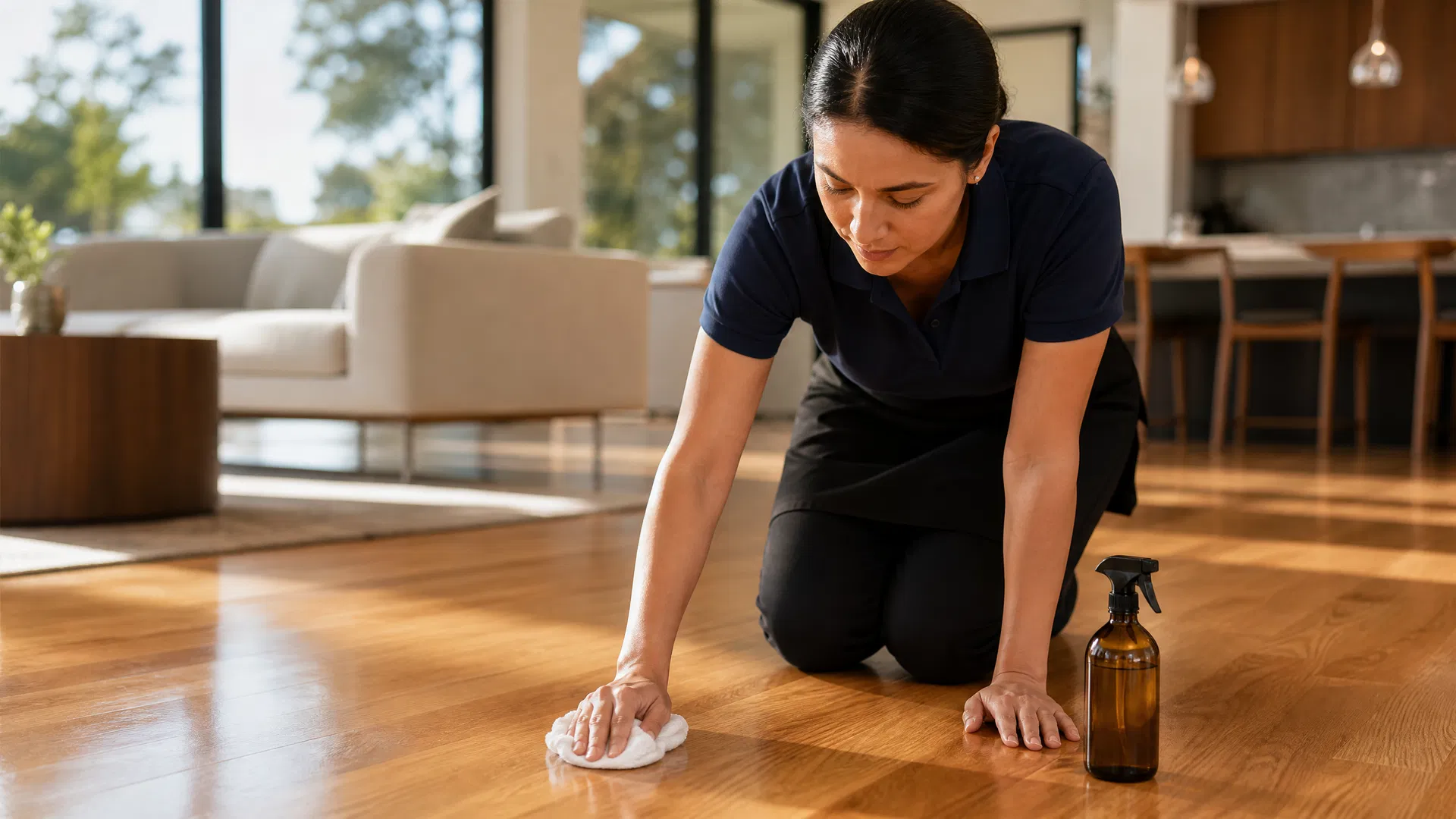
You found a sticky mess on your hardwood floor or wood furniture — maybe a price tag that won't budge, candle wax, tape residue, or a mystery gunk the kids left behind. Someone told you to try Goo Gone. But before you reach for that orange bottle, you're smart to pause and ask: is Goo Gone actually safe on wood?
The short answer is: yes, Goo Gone can be used on wood, but with important caveats. The type of wood, the finish, and how you apply it all matter enormously. Used correctly, it's a powerful ally. Used carelessly, it can strip finishes, cloud lacquer, or leave oily residue behind. This guide walks you through everything you need to know.
What Is Goo Gone and How Does It Work?
Goo Gone is a petroleum-based adhesive remover made by Weiman Products. Its active ingredient is a citrus-derived solvent (d-limonene) combined with mineral spirits. This combination dissolves the polymer chains in adhesives, making sticky substances easy to wipe away.
The same solvent chemistry that makes Goo Gone effective at dissolving glue also makes it capable of softening or lifting certain wood finishes — particularly lacquer, shellac, and some water-based polyurethanes. This is why the application technique matters as much as the product itself.
Types of Wood Surfaces: What's Safe and What's Not
Sealed / Finished Hardwood Floors
Most modern hardwood floors are sealed with polyurethane, aluminum oxide, or UV-cured finishes. These are generally resistant to brief contact with Goo Gone, but you should never let it sit. Apply a small amount, work quickly, and wipe clean within 30–60 seconds. Prolonged exposure can dull the finish or cause micro-hazing.
Lacquered or Shellac-Finished Wood
Antique furniture, older cabinetry, and some vintage hardwood floors may be finished with lacquer or shellac. These finishes are solvent-sensitive and can be damaged by Goo Gone. Always test in an inconspicuous area first. If the finish softens, clouds, or becomes tacky, stop immediately and switch to a gentler method.
Unfinished or Raw Wood
Raw wood is porous, and Goo Gone's oily base will absorb deeply into the grain, potentially leaving a permanent stain. For unfinished wood, try rubbing alcohol or a paste of baking soda and coconut oil instead.
Painted Wood
Goo Gone can soften latex and oil-based paint if left on too long. For painted trim, cabinets, or furniture, use it sparingly and rinse thoroughly with soapy water immediately after.
Oiled or Waxed Wood
Wood treated with Danish oil, tung oil, or paste wax can be stripped of its protective layer by Goo Gone. After removing the sticky substance, you'll likely need to re-oil or re-wax the affected area.
Ready for a Spotless Home?
Get a free, no-obligation estimate in 60 seconds. Eco-friendly products, Greentified™ re-clean guarantee, and a team you can trust.
Get My Free Estimate →Step-by-Step: How to Use Goo Gone on Wood Safely
Step 1 — Patch Test First
Always test on a hidden area (inside a cabinet door, under a table, in a corner). Apply a small drop, wait 60 seconds, then wipe. Check for discoloration, softening, or finish removal. If the surface looks unchanged, you're good to proceed.
Step 2 — Apply Sparingly
Less is more. Apply a small amount directly to the sticky residue, not to the surrounding wood. A cotton ball, Q-tip, or corner of a cloth gives you precision. Avoid pouring or spraying broadly.
Step 3 — Work Quickly
Allow Goo Gone to sit on the residue for no more than 30–60 seconds. The solvent needs time to penetrate the adhesive but shouldn't linger on the wood finish. Use a soft cloth or plastic scraper to gently lift the residue.
Step 4 — Wipe Clean Immediately
Once the residue is removed, wipe the area thoroughly with a clean, dry cloth. Then follow up with a damp cloth (warm water with a drop of dish soap) to remove all oily residue. Dry completely.
Step 5 — Condition the Wood
After cleaning, apply a small amount of wood conditioner, furniture polish, or floor cleaner appropriate for your finish type. This restores any oils removed during the process and protects the surface.
What Goo Gone Works Best For on Wood
Goo Gone is particularly effective at removing the following from wood surfaces:
- Price tag and sticker residue
- Tape adhesive (masking tape, duct tape, packing tape)
- Candle wax drips
- Crayon marks
- Tree sap and pine pitch
- Grease and cooking oil stains
- Gum and chewing gum residue
- Dried glue (white glue, wood glue, super glue)
Natural Alternatives to Goo Gone for Wood
If you prefer eco-friendly cleaning or are hesitant to use a petroleum-based product on your wood surfaces, these alternatives work well for many types of sticky residue:
| Alternative | Best For | Notes |
|---|---|---|
| Rubbing alcohol (70%) | Sticker residue, tape | Evaporates quickly, low risk |
| Coconut oil + baking soda paste | Sticker residue, crayon | Gentle, conditions wood |
| White vinegar (diluted 50/50) | Light adhesive, wax | Rinse thoroughly after |
| Olive oil | Sticker residue | Rub in, let sit 5 min, wipe |
| Peanut butter | Gum, wax | Oil content dissolves adhesive |
What NOT to Do When Removing Sticky Residue from Wood
Knowing what to avoid is just as important as knowing what works:
- Don't use acetone or nail polish remover — these are far too aggressive and will strip most wood finishes instantly.
- Don't scrub with steel wool or abrasive pads — these will scratch the finish and leave permanent marks.
- Don't let any solvent pool or soak in — always apply to a cloth first, not directly to the wood.
- Don't skip the rinse step — leaving Goo Gone's oily residue on wood can attract dust and make the surface feel greasy.
- Don't use on antique or museum-quality pieces — consult a professional furniture restorer instead.
When to Call a Professional
Some situations call for professional help rather than a DIY approach. Consider calling a professional cleaning service if:
- The residue covers a large area of hardwood flooring
- You're dealing with a valuable antique or heirloom piece
- The finish has already been damaged and needs restoration
- The sticky substance has been there for months and has hardened deeply
- You're not sure what finish your floors or furniture have
At Green Planet Cleaning Services, our team handles exactly these kinds of situations — carefully, with eco-friendly products that are safe for your family and your finishes. We know which products work on which surfaces, and we never guess.
Frequently Asked Questions
Is Goo Gone safe for hardwood floors?
Yes, Goo Gone is generally safe for sealed hardwood floors when used correctly. Apply a small amount, work quickly, and rinse thoroughly with soapy water immediately after. Never let it sit for more than 60 seconds and always test in a hidden area first.
Will Goo Gone remove the finish from wood?
It can, if left on too long or used on sensitive finishes like shellac or lacquer. Polyurethane-finished floors are more resistant, but prolonged exposure to any solvent can cause hazing or dullness. The key is speed — apply, remove the residue, and rinse immediately.
Can I use Goo Gone on wood furniture?
Yes, with the same precautions as floors. Test in a hidden area first, apply sparingly to the sticky spot only, and clean up thoroughly afterward. For antique or lacquered furniture, use a gentler alternative like rubbing alcohol or coconut oil.
What's the best way to remove sticker residue from wood without damaging it?
For most finished wood, rubbing alcohol on a cotton ball is the safest first option — it evaporates quickly and has minimal risk to the finish. If that doesn't work, Goo Gone applied carefully and rinsed immediately is very effective. For unfinished wood, try a coconut oil and baking soda paste.
Does Goo Gone leave a residue on wood?
Yes — Goo Gone has an oily base that will leave a greasy film if not rinsed properly. Always follow up with a damp cloth and a drop of dish soap to remove all traces, then dry the surface completely. Skipping this step is the most common mistake people make.
Can I use Goo Gone on engineered hardwood?
Engineered hardwood has a thin veneer of real wood over a plywood core. The same rules apply — test first, apply sparingly, and rinse quickly. The finish on engineered hardwood is typically aluminum oxide or polyurethane, which is fairly solvent-resistant when treated briefly.
What should I do if Goo Gone damaged my wood finish?
If you notice hazing, cloudiness, or tackiness after using Goo Gone, stop immediately. For minor hazing on polyurethane floors, a coat of floor polish may restore the sheen. For more significant damage, consult a professional floor refinisher. Do not try to sand or buff the area yourself without guidance.
Let Green Planet Handle the Cleaning
Family-owned since 2010. 100% eco-friendly. Greentified™ Guarantee — if you're not happy, we re-clean for free within 24 hours.
Serving Marin County, San Francisco, Sonoma, Napa, San Mateo & Contra Costa.