Most cleaning guides for allergy sufferers focus on what products to use. The more important question is how to clean — because the act of cleaning itself temporarily increases airborne allergen concentrations. Vacuuming with a standard vacuum redistributes fine particles. Dry dusting sends allergens airborne. Even opening windows during cleaning can introduce outdoor pollen at peak hours.
This guide covers the six major indoor allergens, the cleaning interventions with the strongest evidence base for each, and the specific products and techniques that reduce allergen exposure rather than redistributing it. It's written for Bay Area households, where the specific allergen calendar — mold season from October through April, tree pollen from February through May — differs from national guides.
The 6 Major Indoor Allergens and How to Address Them
| Allergen | Primary Sources | Peak Season (Bay Area) | Key Interventions |
|---|---|---|---|
| Dust mites | Bedding, upholstery, carpet | Year-round (higher in humidity) | HEPA vacuum weekly, wash bedding 60°C+, allergen-proof covers, dehumidifier to <50% RH |
| Pet dander | All surfaces, air, HVAC | Year-round | HEPA vacuum 2×/week, HEPA air purifier, wash pet bedding weekly, keep pets off sleeping areas |
| Mold spores | Bathroom, kitchen, basement, HVAC | Wet season (Bay Area: Oct–Apr) | Fix leaks, dehumidify, clean with hydrogen peroxide, HEPA vacuum, improve ventilation |
| Pollen | Tracked in from outside, open windows | Spring (tree), Summer (grass), Fall (weed) | Remove shoes at door, HEPA air purifier, close windows during peak pollen hours (5–10 AM) |
| Cockroach allergen | Kitchen, basement, gaps in walls | Year-round (higher in warm months) | Seal food, fix leaks, professional pest control, HEPA vacuum frequently |
| Cleaning product VOCs | Cleaning products themselves | During and after cleaning | Switch to EPA Safer Choice certified products, ventilate during cleaning, fragrance-free products only |
Ready for a Spotless Home?
Get a free, no-obligation estimate in 60 seconds. Eco-friendly products, Greentified™ re-clean guarantee, and a team you can trust.
Get My Free Estimate →The Right Equipment Makes More Difference Than Products
For allergy sufferers, equipment choices matter more than product choices. The three most impactful equipment upgrades are:
1. HEPA-Rated Vacuum
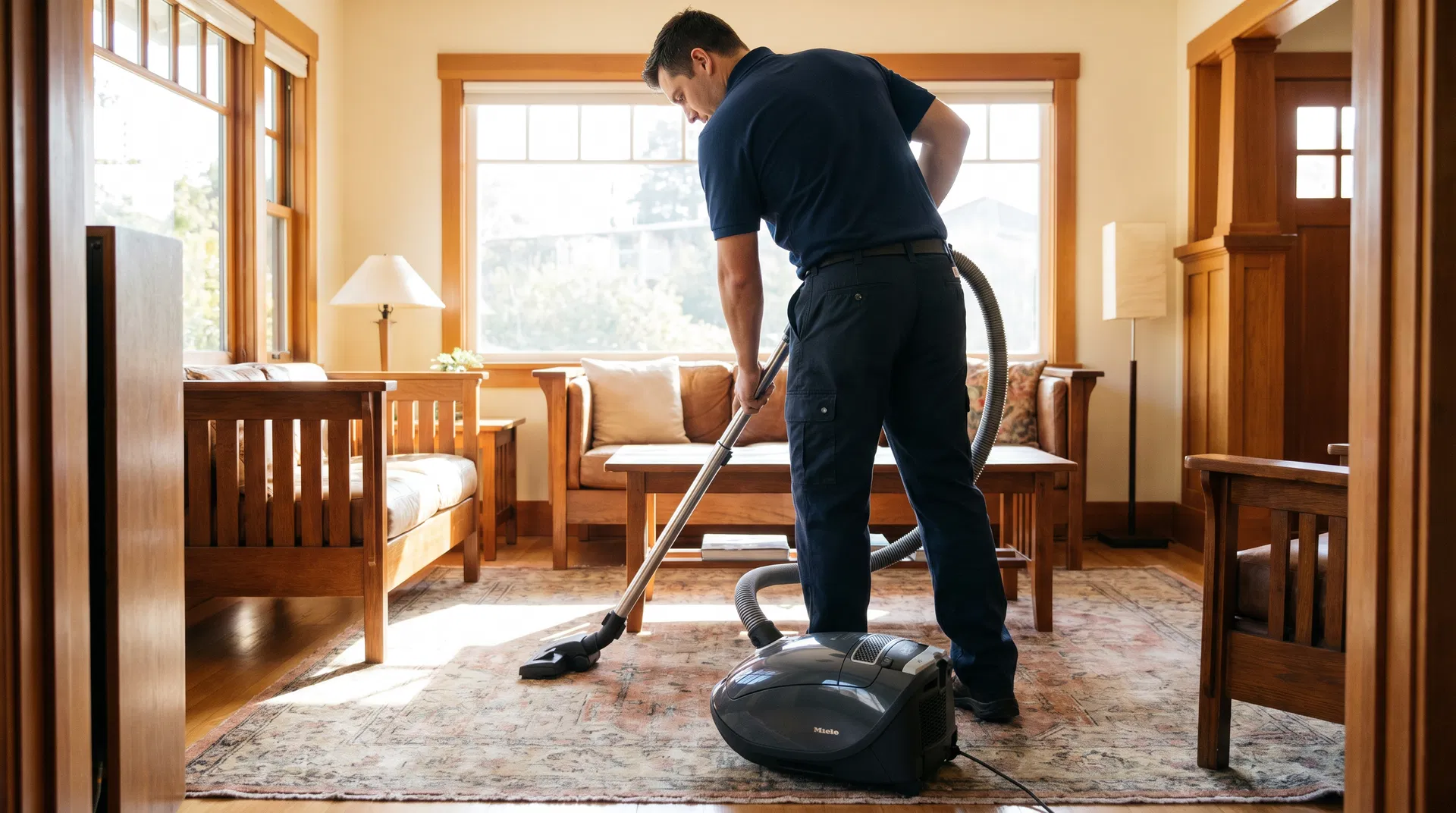
A true HEPA vacuum (99.97% particle capture at ≥0.3 microns) captures dust mite allergen, pet dander, and mold spores rather than exhausting them back into the air. The difference is significant: a 2020 study in the Journal of Allergy and Clinical Immunology found that HEPA vacuuming reduced airborne allergen concentrations by 60% compared to standard vacuuming, which actually increased airborne concentrations during use. Look for vacuums with sealed HEPA systems — not just HEPA filters, which can leak around the edges if the vacuum body isn't sealed.
2. HEPA Air Purifier
A HEPA air purifier running continuously in the bedroom provides the most sustained allergen reduction of any single intervention. The bedroom is where you spend 7–9 hours per night — reducing allergen exposure during sleep has a disproportionate impact on overall symptom burden. Size the purifier for the room: a CADR (Clean Air Delivery Rate) of at least 2/3 the room's square footage is the standard recommendation.
3. Microfiber Cloths (Damp, Not Dry)
Microfiber cloths used damp capture dust rather than redistributing it. Dry dusting with feather dusters or dry cloths sends allergens airborne. Microfiber's electrostatic charge attracts and holds particles. Wash microfiber cloths after each use — a dirty microfiber cloth redistributes allergens rather than capturing them.
Bay Area Allergy Calendar: When to Intensify Cleaning
The Bay Area has a distinct allergen calendar that differs from national patterns. Understanding it allows you to intensify cleaning interventions at the right times rather than maintaining maximum effort year-round.
Frequently Asked Questions
Let Green Planet Handle the Cleaning
Family-owned since 2010. 100% eco-friendly. Greentified™ Guarantee — if you're not happy, we re-clean for free within 24 hours.
Serving Marin County, San Francisco, Sonoma, Napa, San Mateo & Contra Costa.